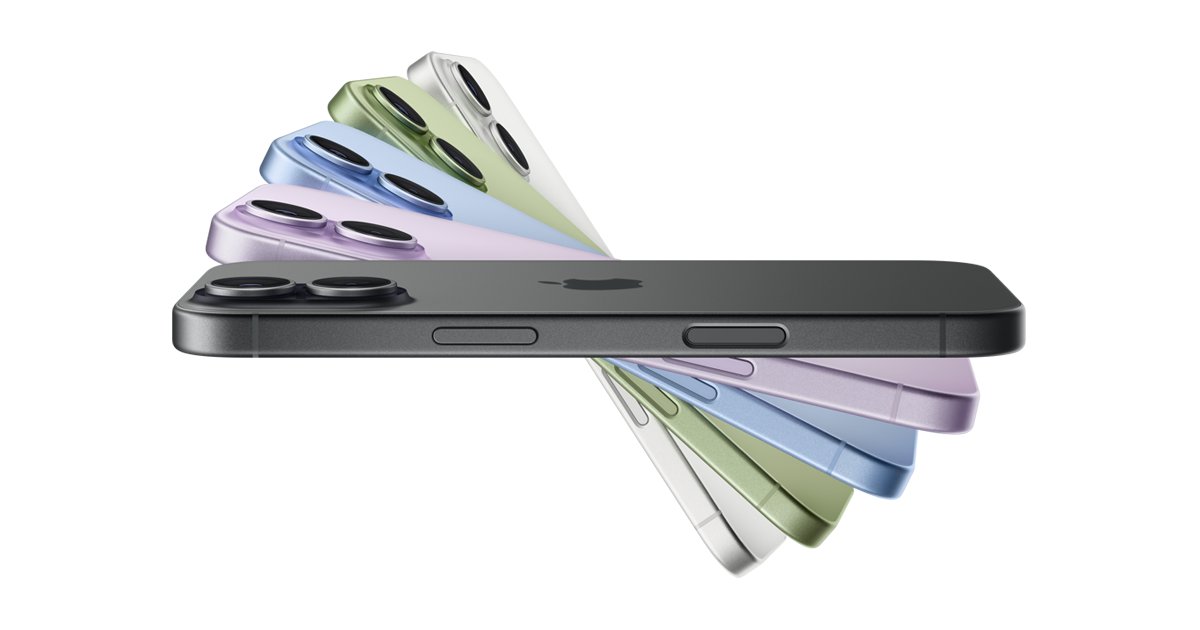
Apple produced about 52 million iPhones in the second quarter of 2026, up 14% from a year earlier, according to TrendForce. The result gave Apple an estimated 19% share of global smartphone production and kept it in second place behind Samsung during a quarter when the broader market contracted.
Samsung remained the largest producer with roughly 62 million smartphones, representing a 23% share of worldwide output. Its production rose 7% year over year.
Global smartphone production reached approximately 275 million units in Q2, down 8% from the same period last year. The decline was less severe than TrendForce had initially expected, prompting the firm to lift its full-year 2026 production forecast to 1.07 billion units from 1.05 billion units previously. That outlook would still represent a 14% annual decline.
TrendForce said the improved annual projection does not necessarily signal a demand recovery. Some consumers brought forward planned handset purchases, while manufacturers reduced the scale of production cuts they had previously announced.
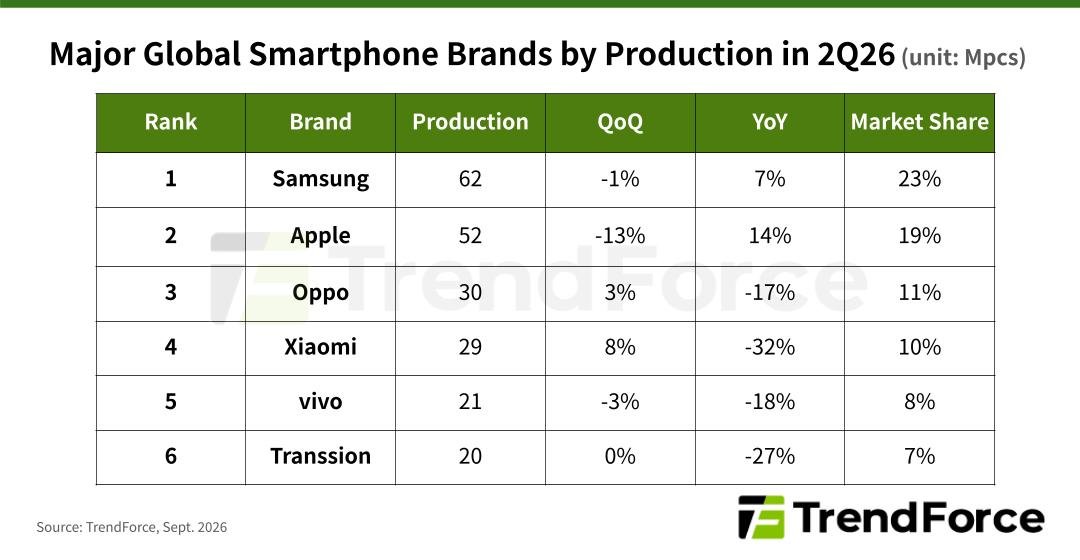
Among the other major manufacturers, OPPO ranked third with 30 million units produced, followed by Xiaomi at 29 million, vivo at 21 million and Transsion at 20 million. Each of those companies recorded significant year-over-year declines, according to the report.
The research firm attributed Apple’s relative strength in part to the pricing strategy for the iPhone 17 series, which it said supported sales through the first three quarters. TrendForce expects price increases for the future iPhone 18 lineup, leaving the demand response to those higher prices as the key variable to watch.