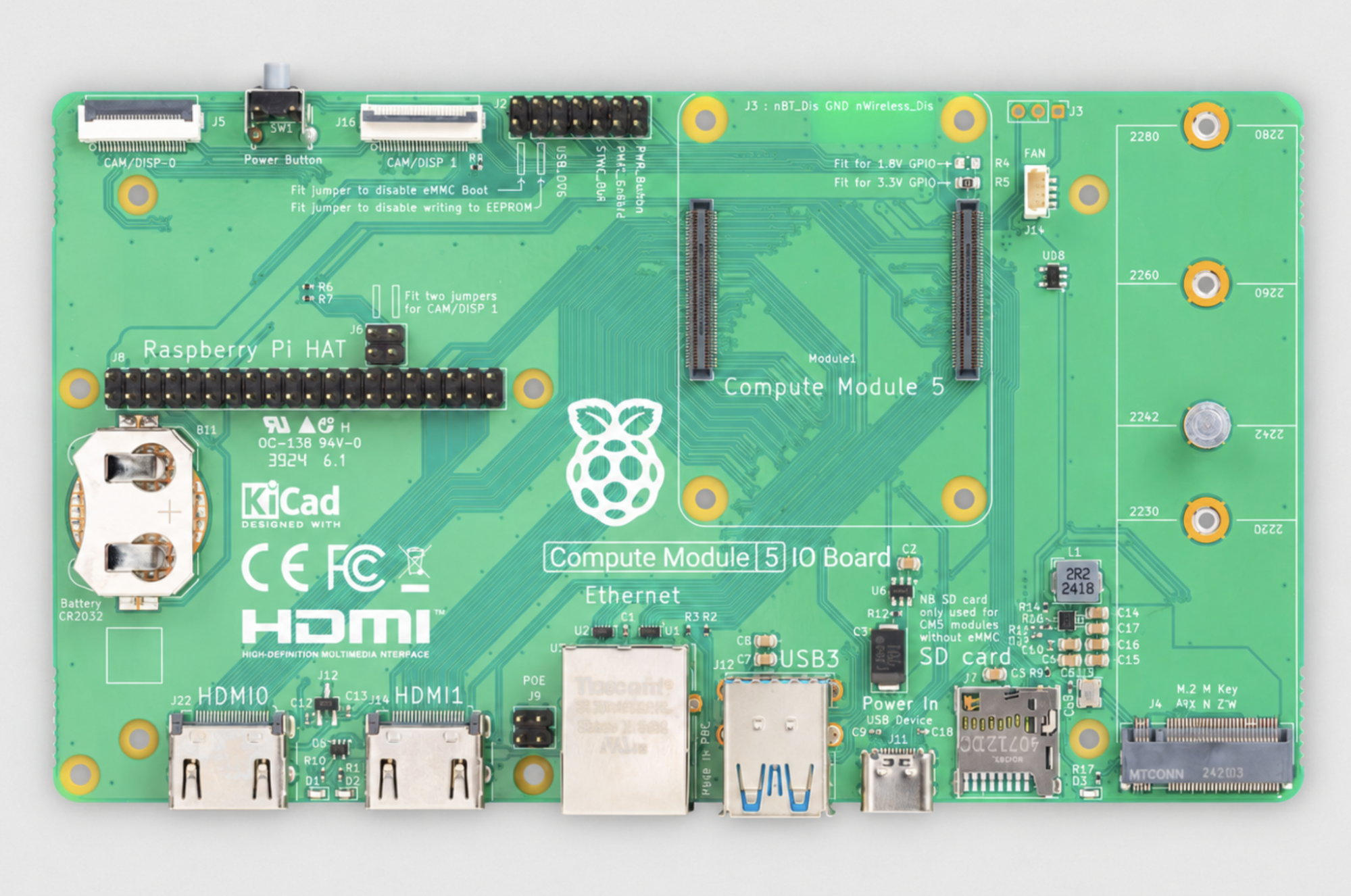
Raspberry Pi has confirmed that some of its newer boards are deliberately limited to the RAM capacity they shipped with. Replacing a soldered memory chip with a compatible higher-capacity part may therefore leave the system reporting its original memory configuration.
The behavior surfaced after a user tried to convert a 2GB Compute Module 5 into a 4GB version using a working RAM chip taken from another CM5. The modified module continued to report 2GB. A Raspberry Pi engineer and company forum moderator said the restriction is intentional.
According to Raspberry Pi, the measure is designed to stop third parties from buying lower-cost boards, fitting memory from uncertain sources and reselling them as higher-RAM variants. Such modified products would not have passed the company’s validation process, while stability failures could still generate support or warranty claims attributed to Raspberry Pi.
The limitation is not simply a stored record of the original capacity. Configurations on some models can include the memory density and organization, SDRAM manufacturer, timing parameters and other optimizations. An identical chip with the same part number may be suitable for a repair, but a different compatible chip is not guaranteed to work. Moving official memory modules between Raspberry Pi boards with different capacities is likewise not a straightforward upgrade route.
RAM replacement remains a specialist procedure in any case: LPDDR chips are soldered directly to the board and require BGA rework equipment and advanced microsoldering skills. The policy is therefore most relevant to modders and repair specialists, while the full range of affected Raspberry Pi models has not been specified.