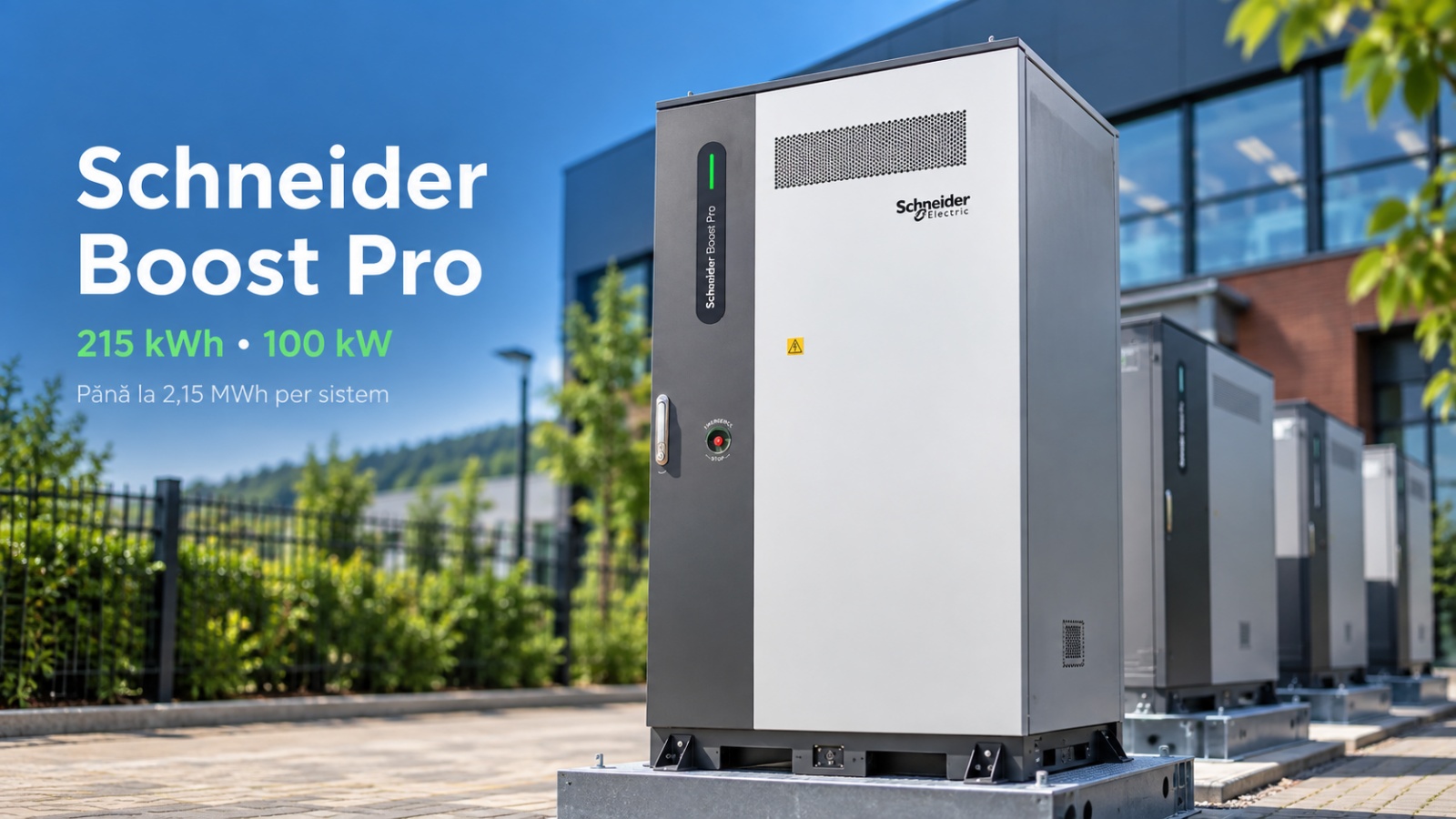
Schneider Electric’s Boost Pro is designed to take commercial and industrial battery storage beyond a single-cabinet installation. Each unit stores 215 kWh and can deliver 100 kW, while a single controller can manage up to 10 units, bringing a deployment to 2.15 MWh of capacity and up to 1 MW of power.
| Configuration | Storage capacity | Power output |
|---|---|---|
| One Boost Pro unit | 215 kWh | 100 kW |
| Up to 10 units under one controller | 2.15 MWh | Up to 1 MW |
That scale positions Boost Pro as building energy infrastructure rather than a simple solar add-on. The system can store photovoltaic generation for later use, shift electricity consumption away from peak periods, support temporary backup loads, and help manage demand created by EV charging infrastructure. EV chargers are an optional integration rather than a requirement for deployment.
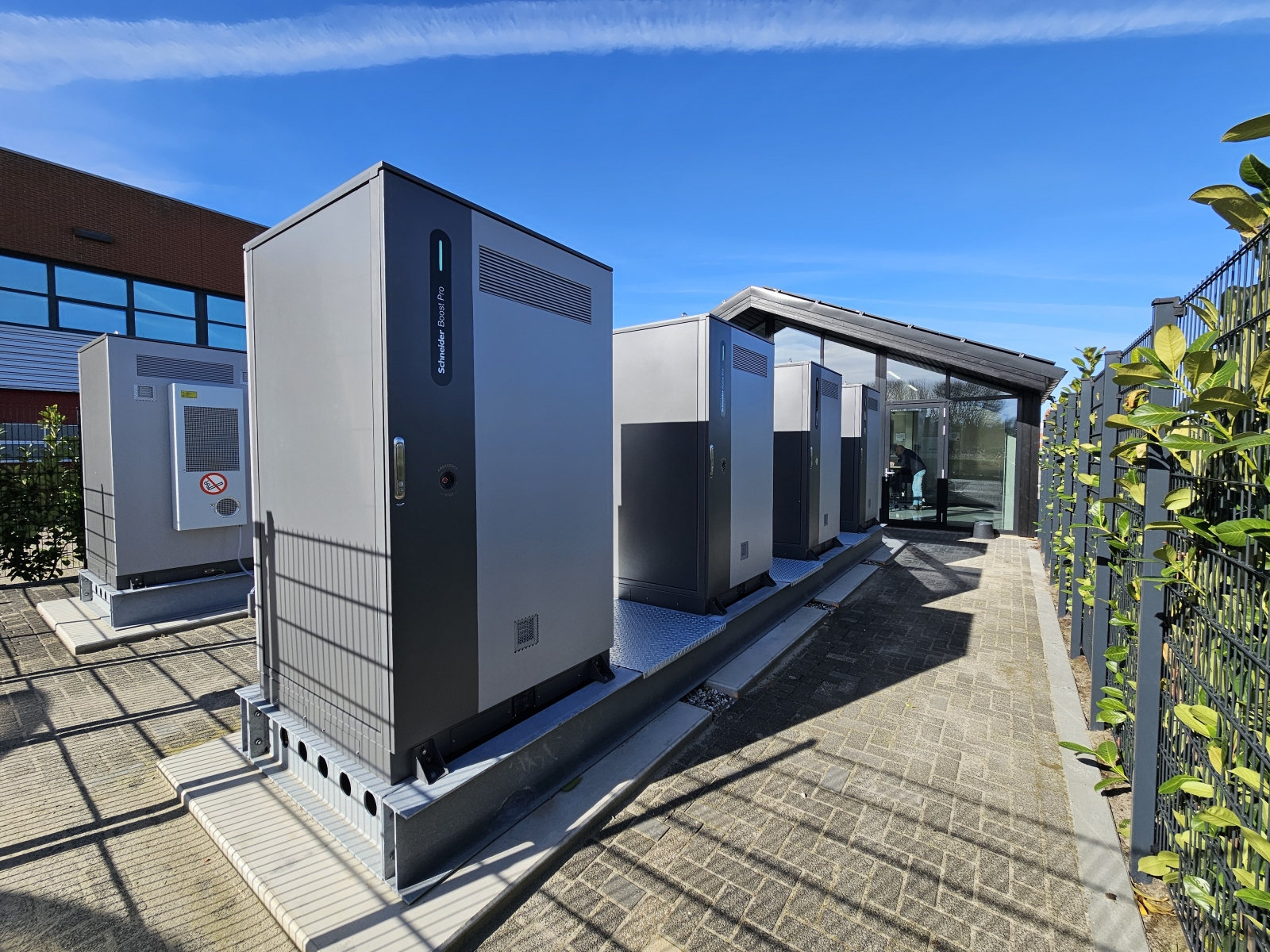
Schneider lists round-trip efficiency of 90.8% for the current Boost Pro configuration, indicating the share of energy recovered after a full charging and discharging cycle. The company also specifies more than 7,300 operating cycles.
- Thermal monitoring uses 264 temperature sensors.
- The system includes active air cooling and electrical protection measures.
- Cell isolation capability is paired with an integrated fire-prevention and fire-suppression system.
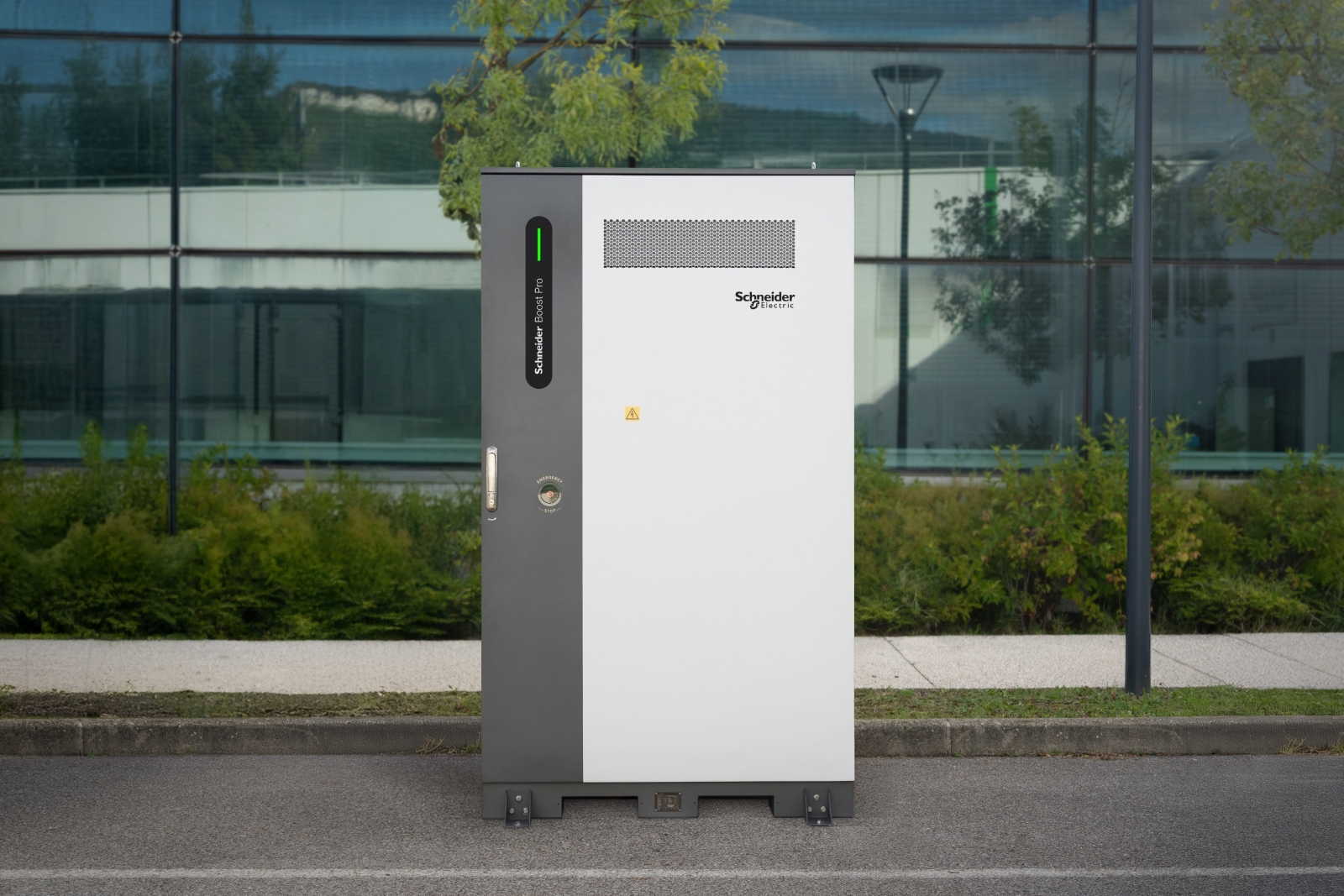
Boost Pro uses Modbus TCP/RTU for connectivity and can communicate with photovoltaic installations and EV charging equipment. It can be controlled through Schneider’s EcoStruxure Energy Asset Controller or EcoStruxure Energy Storage Gateway, including as part of a wider energy-management deployment. Schneider also cites encrypted communications and a cybersecurity-by-design approach.
The industrial system follows Schneider’s wider push to combine generation, storage and charging management in one ecosystem, an approach the company also showed with Schneider Home at CES 2023. Pricing and market-by-market availability for Boost Pro were not detailed in the material reviewed.