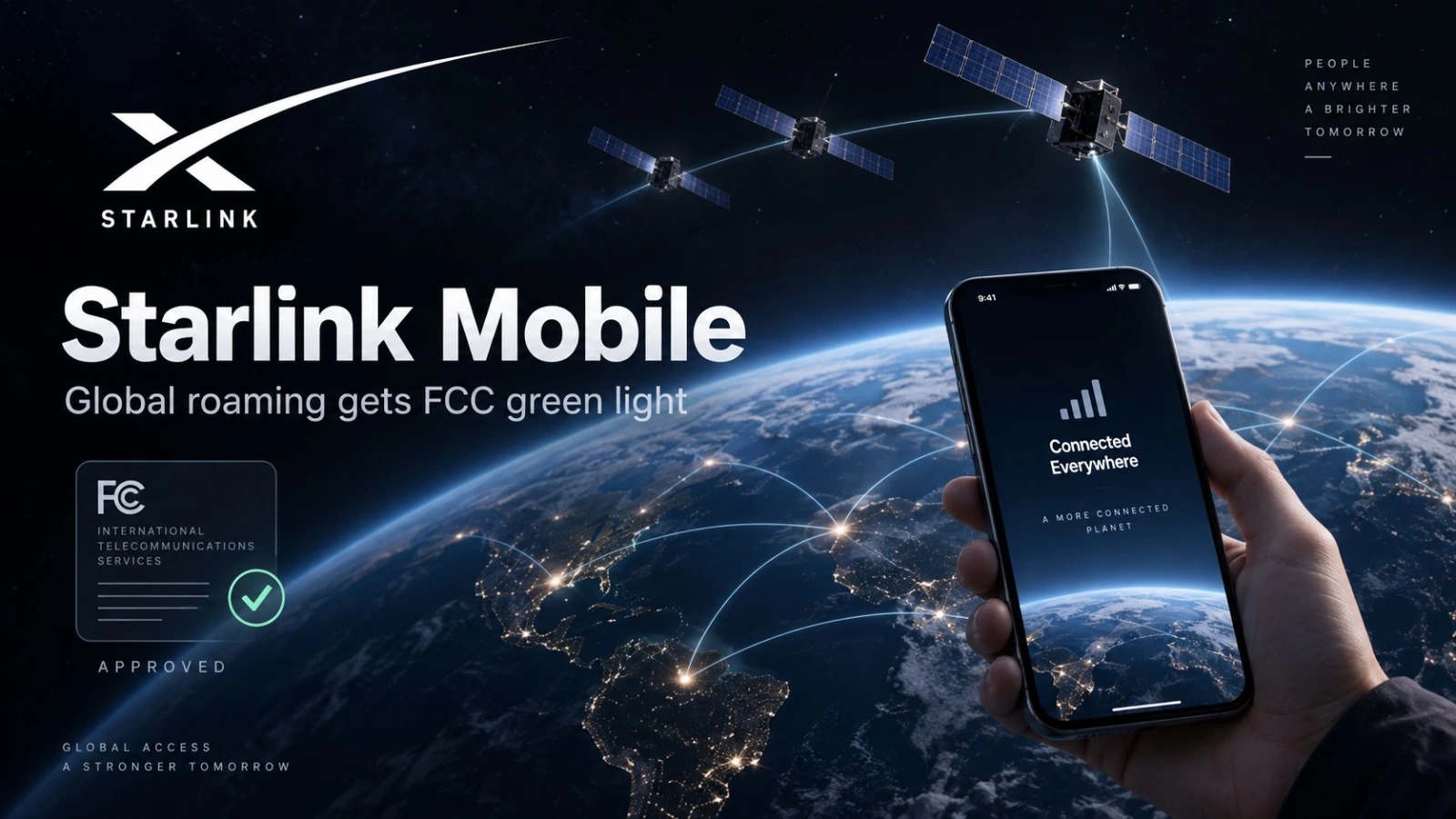
SpaceX is moving closer to operating its own mobile network after announcing plans to acquire a nationwide portfolio of up to 14 MHz of spectrum in the 800 MHz band in the United States. The proposed deal, which still requires final FCC approval, would give Starlink Mobile spectrum suited to complementing its Direct to Cell satellite service with terrestrial coverage.
The 800 MHz band is particularly valuable for broad-area coverage and indoor signal penetration—two areas where satellite connectivity alone has limits. SpaceX says most current phones already support the frequency, while its global 2 GHz spectrum will be used to add capacity.
The transaction marks a strategic shift for Starlink. Direct to Cell has so far relied on partnerships with established mobile operators, including T-Mobile in the US. With its own spectrum and planned ground infrastructure, SpaceX is positioning Starlink Mobile to compete more directly with conventional carriers, while international expansion is still expected to depend on local partnerships and regulatory approvals.

A larger Direct to Cell constellation
The spectrum announcement arrived alongside FCC approval for SpaceX’s next-generation Starlink Mobile Gen2 proposal, covering up to 15,000 satellites optimized for 2 GHz spectrum. SpaceX says its V2 satellites will deliver more than 100 times the bandwidth of the current Direct to Cell generation and will connect directly to unmodified handsets.
That combination could give Starlink Mobile a different coverage model from a conventional carrier. Terrestrial networks remain central to service in cities and along heavily traveled routes, while satellite links could extend connectivity across remote land areas, mountains and oceans where building cell sites is difficult or uneconomical.
SpaceX has previously said Direct to Cell had become the largest 4G network by geographic coverage, serving millions of users through local operator partners. The Gen2 plan points to a transition toward 5G and substantially higher capacity, but a commercial Starlink Mobile offering built around the new spectrum has not yet been detailed.
The prospect of a more independent Starlink mobile operation has already drawn attention from the established US carrier market. Shares in T-Mobile, AT&T and Verizon fell following the announcement, while Deutsche Telekom, T-Mobile US’s controlling shareholder, reportedly lost about 7% in a single trading session. The immediate next milestones are final FCC clearance for the spectrum transaction and further details on the terrestrial network SpaceX plans to build.