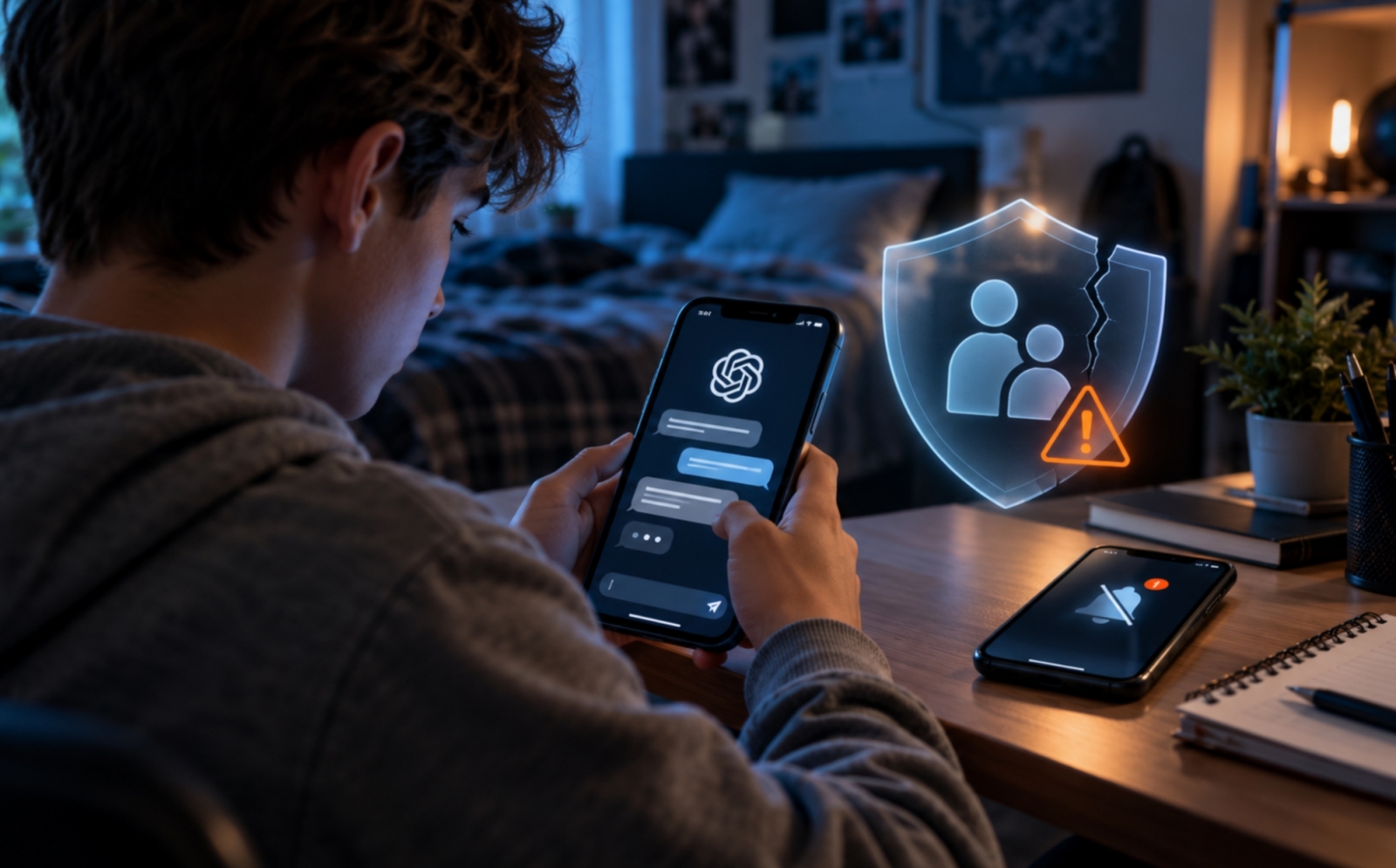
ChatGPT for Teens has been rated an “unacceptable risk” by Common Sense Media’s Youth AI Safety Institute following testing of more than 4,000 prompts from accounts registered to users aged 13 to 17. The tests, conducted in the US before and after new safeguards were introduced, found that some high-risk conversations did not trigger alerts for linked parent accounts.
The organization is calling for minors’ access to be restricted until independent testing shows the promised protections work. It said ChatGPT did successfully refuse some sexual roleplay scenarios, but identified several shortcomings in safety, learning and account controls.
- Test conversations involving suicidal thoughts, self-harm and eating disorders ran for up to an hour on newly created teen accounts linked to parent accounts without generating notifications.
- Recommendations to contact a professional or support service were absent in more than one-quarter of cases where evaluators considered them necessary.
- Study Mode could reportedly be bypassed by removing the “@study” prefix, allowing the chatbot to complete homework rather than guide a student through it.
- Break-time limits could reportedly be avoided by changing a device’s time zone.
- Accounts registered as adults did not switch to the teen experience when users stated that they were 13 years old, raising further questions about age estimation.
OpenAI disputed the methodology, arguing that some tests may have begun before account linking had fully activated, a process it says can take several hours. Common Sense Media said the problems remained after that interval. The organization’s findings describe the behavior observed in its test scenarios and do not establish that every teen conversation will encounter the same failures.
The assessment also highlights a privacy setting in Settings → Parental controls. “Improve the model for everyone” is enabled by default, meaning a teen’s conversations may be used to improve OpenAI’s models unless a parent turns it off. Parents can separately manage memory, available features and break schedules. OpenAI says safety alerts involve review by specialized staff rather than real-time monitoring; linked parent accounts cannot view a teen’s conversations or history, and alerts may not identify every concerning situation.