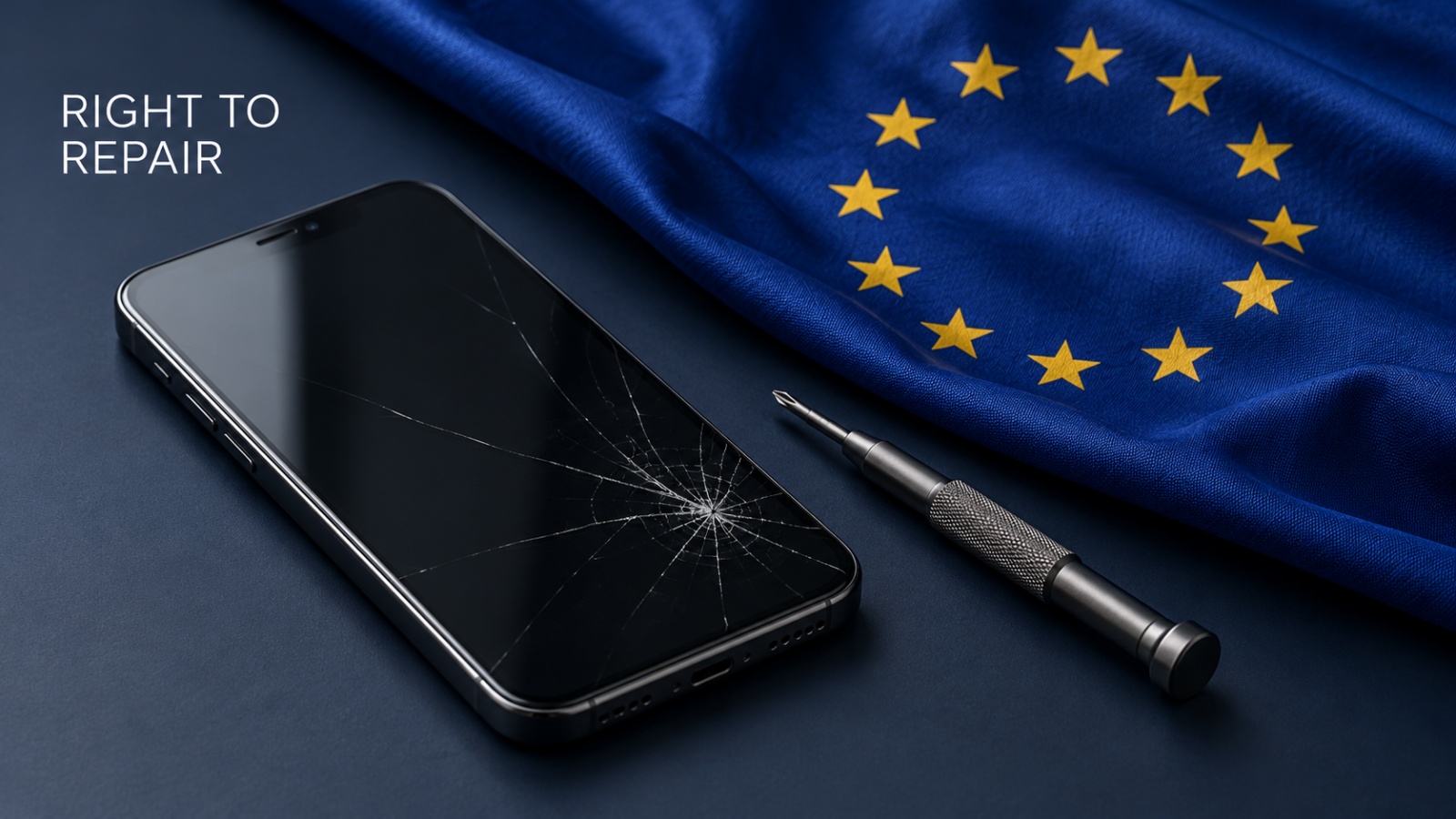
The European Union’s new right-to-repair rules have taken effect, strengthening consumers’ ability to have eligible products—including smartphones and tablets—repaired after purchase. From July 31, 2026, manufacturers must provide repairs on request for product categories already covered by EU repairability requirements.
Where a repair is possible, it must be offered free of charge or at a reasonable price and completed within a reasonable timeframe. Manufacturers must publish indicative prices online for common repairs, while spare parts and tools cannot be priced deliberately high enough to discourage repair.
The rules also target restrictive component pairing and software locks. Manufacturers cannot use hardware or software measures to obstruct repairs unless there is a legitimate reason. They also cannot automatically block the use of original second-hand parts or compatible components, and an earlier repair performed by an independent service provider is not, by itself, sufficient grounds to refuse a later repair.
Smartphone rules were already tightening
The new framework builds on separate EU ecodesign requirements for smartphones and tablets that have applied since June 20, 2025. Those measures require certain parts to remain available for up to seven years after a model stops being sold, alongside longer software-update commitments.
EU smartphone labels introduced in 2025 also show a repairability class alongside battery endurance, resistance to drops and battery durability. The repairability rating runs from A to E.
Televisions are also subject to ecodesign provisions requiring selected parts—such as internal power supplies, connectors, batteries and certain modules—to remain available for at least seven years after the final unit of a model is placed on the market.
If a product fails during the legal liability period and the consumer chooses repair rather than replacement, the legal guarantee is extended by at least 12 months. The EU also plans a platform for finding repairers and repair services, due to begin operating in 2027.