
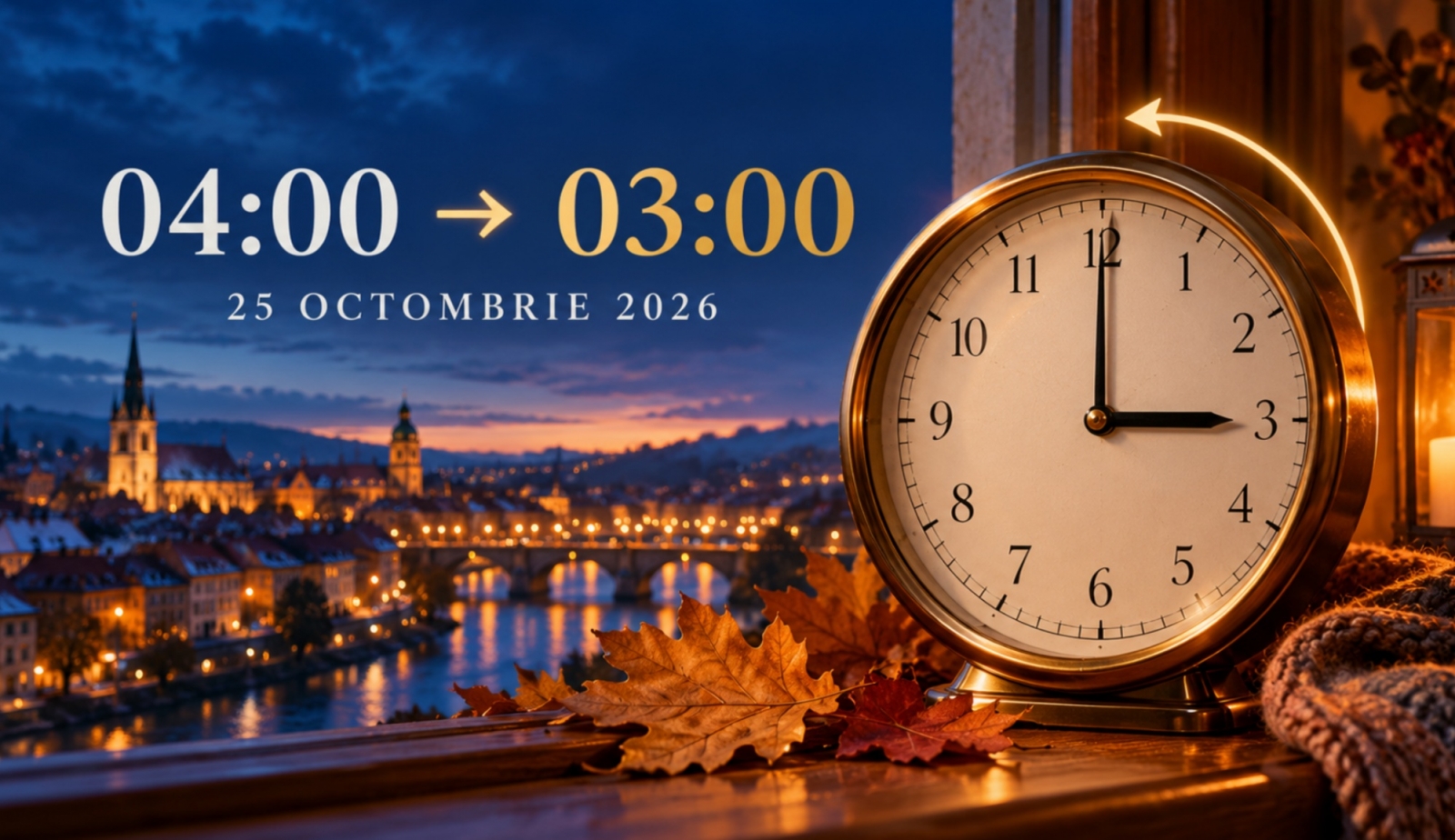
The European Union’s seasonal clock change will remain in place in 2026, with member states returning from summer time to standard time on Sunday, October 25. The date is the final Sunday of October, as required under the EU’s current timetable.
In locations moving from UTC+3 summer time to UTC+2 standard time, clocks will go back from 4:00 a.m. to 3:00 a.m. The repeated hour makes the local day 25 hours long. Sunrise and sunset will appear roughly an hour earlier on the clock, although the change does not alter the amount of natural daylight.
The EU has discussed ending the biannual adjustment for years, and the European Parliament voted in 2019 to discontinue the system. That legislative process was not completed, however, so the current rules remain in force: clocks advance on the last Sunday of March and return to standard time on the last Sunday of October. October 25, 2026 has not been designated as the final seasonal clock change.
Countries that ended seasonal changes
Several major countries have already abandoned seasonal clock adjustments, while EU member states continue to use the system.
- China ended the practice in 1992.
- Russia ended seasonal clock changes in 2011.
- Turkey ended the system in 2016.
The modern concept dates back to a 1895 proposal by New Zealand scientist George Vernon Hudson. Port Arthur, Ontario—now part of Thunder Bay—introduced daylight saving time on July 1, 1908. Germany and Austria-Hungary adopted the system nationally on April 30, 1916, during World War I, with the UK and France following later that year.