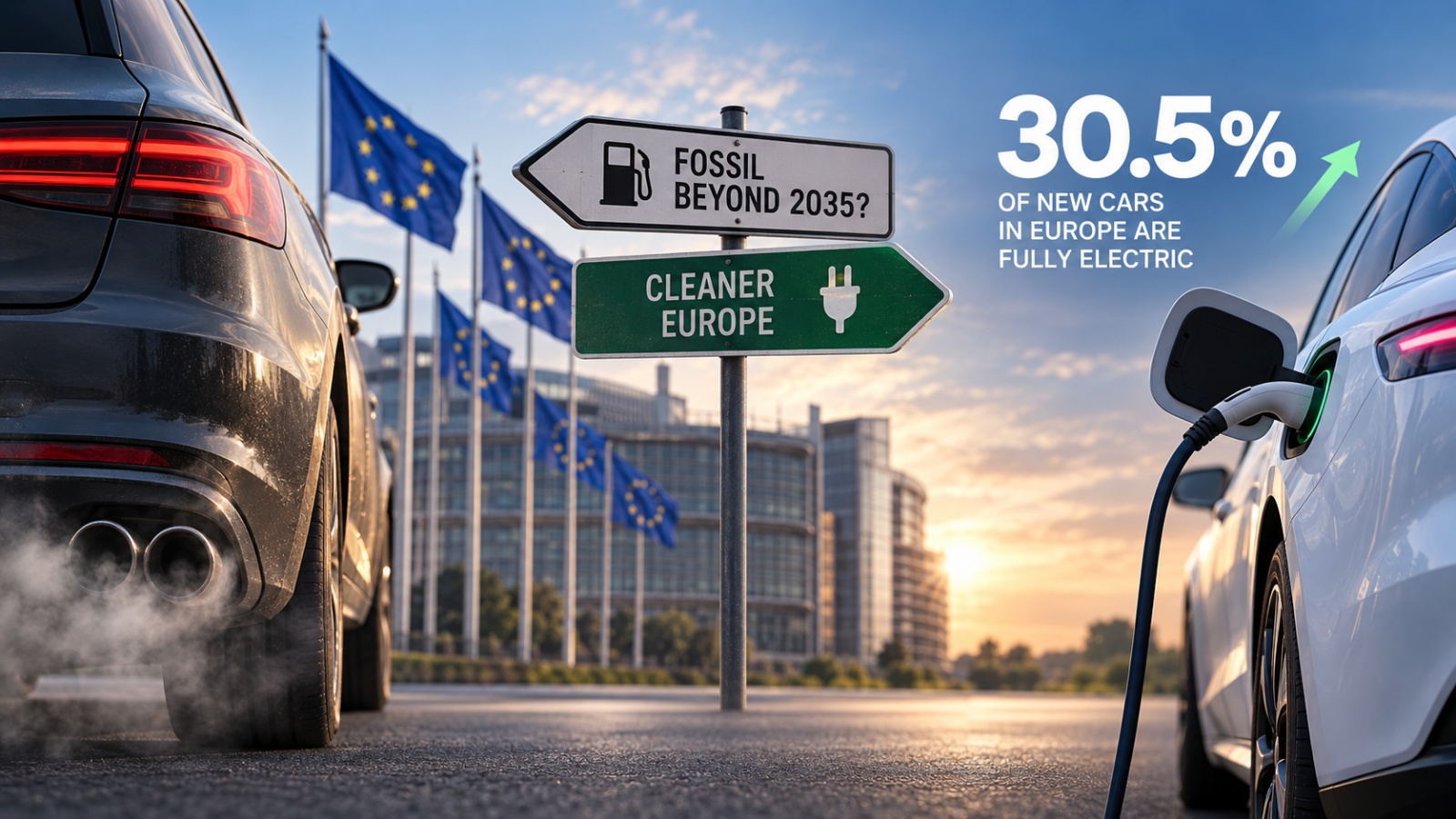
Battery-electric vehicles accounted for 30.5% of new-car registrations across 16 European markets in August 2026, with 202,833 BEVs registered during the month. That was a 54.2% increase from August 2025, according to data cited by Reuters.
The pace adds fresh market context to the European Union’s unsettled 2035 vehicle-emissions policy. The law currently requires average CO2 emissions from new cars and vans to fall by 100% from 2035, effectively ending sales of conventionally fueled new petrol and diesel vehicles in those categories.
The European Commission proposed a change in December 2025 that would reduce the target to 90%. The remaining reduction could be offset through measures including lower-emissions steel, e-fuels and biofuels, potentially leaving room for hybrids and some internal-combustion vehicles after 2035. That proposal has not replaced the existing legislation.
BEV adoption differed sharply among the markets tracked in August:
- Norway: 98.7% BEV share of new registrations
- Denmark: 85.9%
- Finland: 52.3%
- Netherlands: 48.9%
- France: 38.3%
- Germany: 32.5%
Across the first eight months of 2026, more than 1.67 million electric cars were registered in the monitored markets, up 33.1% year over year. The August result is not directly comparable with full-year estimates using different market coverage, but it stands against forecasts of a 23% annual BEV share for the EU from T&E and about 21% for Europe from Rho Motion.
The growing share also reflects a broader expansion of available models. In Germany, the number of BEV models on offer rose from 38 in 2020 to 159 in 2025. Even so, electric-car demand remains sensitive to pricing, charging infrastructure and public incentives; government support schemes contributed to part of Europe’s 2026 growth.
The European People’s Party, the EU’s largest center-right political group, has backed a technology-neutral approach and called for the removal of the 2035 internal-combustion-engine ban, arguing that manufacturers still have factories, investment and jobs tied to combustion technology. For now, the 100% target remains in force, with the proposed 90% revision still the key unresolved policy decision.