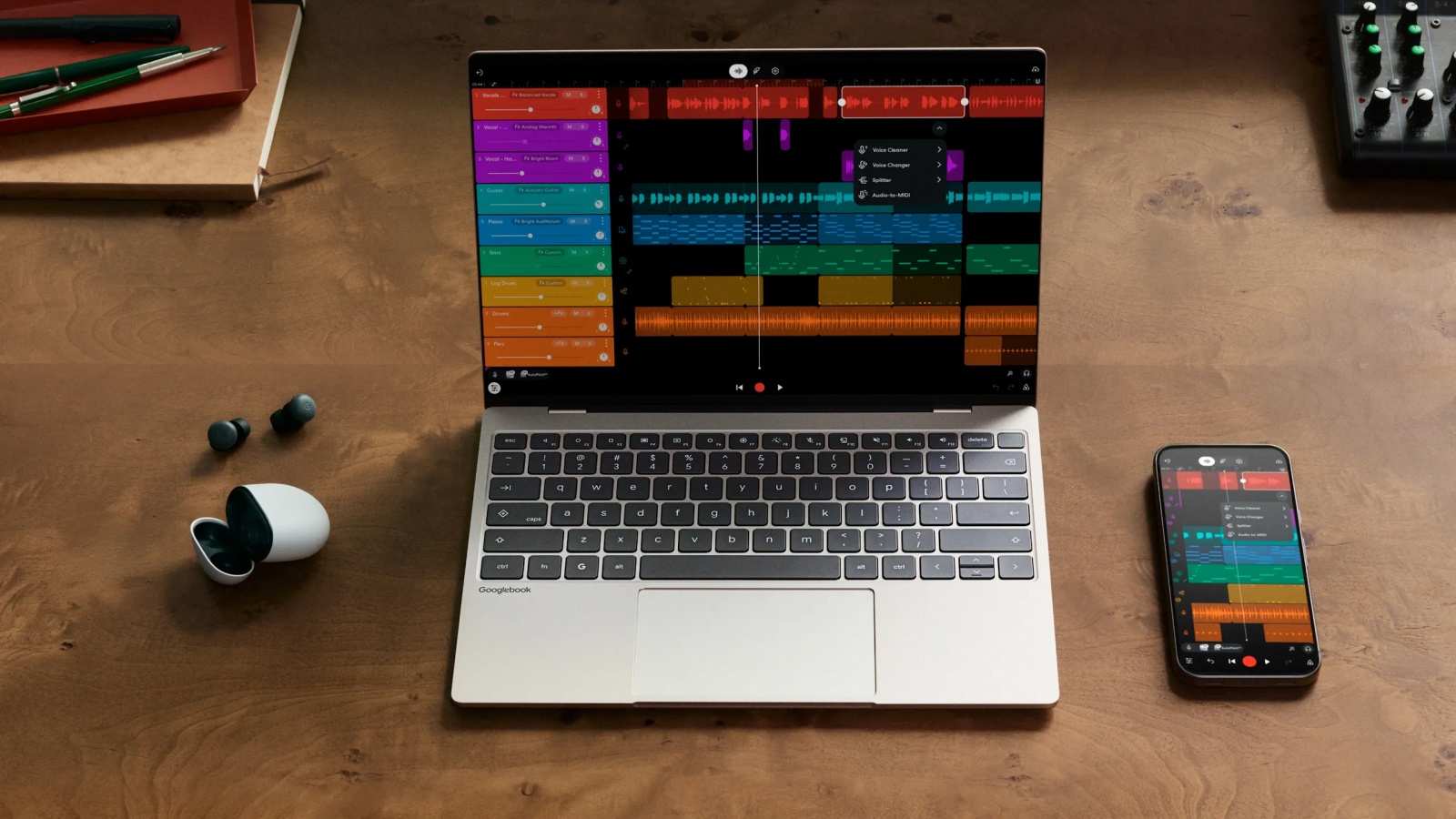
Google is positioning Googlebook as more than a new laptop category: it is an effort to make Android the common layer connecting phones, PCs, apps and Google services. The platform is built on Android technology while retaining desktop components inherited from ChromeOS, and it can bring settings, passwords, Wi-Fi networks, messages, files and in-progress phone activity onto a laptop.
That strategy puts the phone at the center of the PC experience rather than treating the laptop as a separate computing environment. Googlebook’s cross-device tools include Continue On for resuming an activity started on a phone, Files for accessing mobile files, and Cast My Apps for using phone apps in a laptop window.
Googlebook also retains several ChromeOS-style desktop capabilities: a full desktop Chrome browser with extension support, a Linux environment and a security architecture derived from ChromeOS. Google Play and Android apps sit alongside those features, while Gemini is intended to operate across the broader device and service stack.
A laptop platform built around Android
Google already had ChromeOS for laptops, but building Googlebook on Android points to a broader platform direction. Android brings an established app ecosystem, developer base and, crucially, the phone that many users already carry. Google has said the shared foundation will help it create a better experience across multiple devices.
The first Googlebook systems reportedly start at $899, use Intel or Qualcomm processors with NPUs rated above 45 TOPS, and are promised up to 10 years of updates. They will run Android applications alongside a desktop-class version of Chrome.
- Acer
- ASUS
- Dell
- HP
- Lenovo
The manufacturer lineup underlines Google’s attempt to establish Android as a PC foundation beyond its own hardware. Rather than simply adding Gemini to a Chromebook-style product, Googlebook is intended to make the laptop a closer extension of an Android phone and its services.
Apple has long pursued a comparable outcome through separate operating systems connected by shared services. Its Continuity features include Handoff for moving work from an iPhone to a Mac or iPad, Universal Clipboard for transferring text and images, and iPhone camera support for Mac. Apple extends that cross-device approach to Apple Watch and Vision Pro as well.
Google’s approach is structurally different: it is bringing the mobile platform itself closer to the laptop, instead of linking separately developed mobile and desktop operating systems. Tablets could become an important middle layer in that plan, although current hiring references to future Pixel phones and tablets do not confirm a Pixel Tablet 2.
Microsoft faces a separate constraint. Phone Link gives Windows users access to phone messages, calls and other data, while Link to Windows is installed on some Android handsets. But Microsoft does not control Android, leaving Windows dependent on a mobile platform owned by Google, while Apple retains control of both its phones and computers. Googlebook’s progress will depend on whether its promised Android-PC integration proves compelling enough to turn that platform ownership into a durable laptop ecosystem.