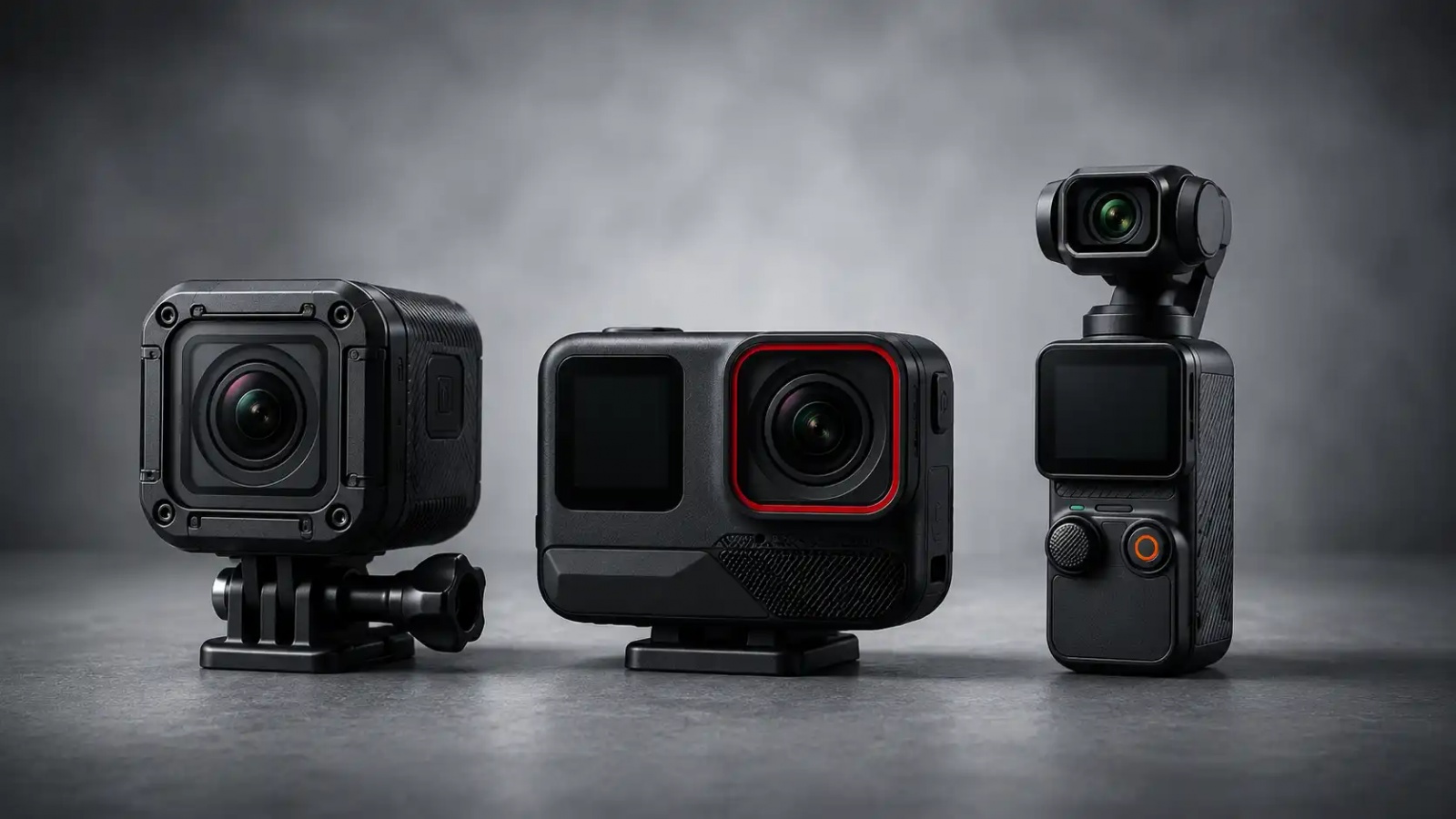
DJI and Insta360 now control 93% of the global portable smart-camera market, according to IDC data for the second quarter of 2026 cited by the Financial Times. DJI held a 73% share and Insta360 20%, while GoPro accounted for just 3% of the category it helped popularize.
- DJI: 73% global market share in Q2 2026
- Insta360: 20% global market share in Q2 2026
- GoPro: 3% global market share in Q2 2026
The shift accelerated during the year. In the first quarter, IDC put DJI at 65% and Insta360 at 22% of a market that shipped 4.14 million units, up 33% year over year. DJI widened its lead over the following three months.
GoPro’s own business has moved in the opposite direction. Its 2025 revenue fell 19% year over year to $651.5 million, while camera shipments dropped nearly 25% to 1.8 million units. In Q2 2026, its hardware revenue declined by almost 40% and camera shipments fell 51.7% from a year earlier. The company has identified the global competitive landscape as a factor eroding its market position.
DJI and Insta360 expand into each other’s territory
The market’s two leaders are no longer simply taking share from GoPro. DJI has applied expertise from its drone business—including stabilization, gimbals, sensors, software control and large-scale manufacturing—to handheld cameras. IDC said DJI led the gimbal-camera segment in Q1, held more than half of the conventional action-camera segment, and also exceeded 50% in the emerging detachable ultracompact-camera category.
Insta360, meanwhile, held nearly 70% of the 360-camera market in Q1. DJI had already reached 22% in that segment with the Osmo 360, and its Osmo 360 II records 8K video at 60 fps. Insta360 has also moved into DJI’s gimbal-camera territory with the Luna Ultra and Luna Pro, positioned against the Osmo Pocket line.
The rivalry has reached the courts as well. DJI has sued Insta360 in the US over alleged infringement of gimbal-camera patents, and Insta360 responded the following day with its own patent-infringement lawsuits.
GoPro’s declining share comes after a sharp reversal in corporate value. The company was valued at nearly $12 billion during its 2014 market peak. In September 2026, it signed a merger agreement with Starman Optical under which GoPro shareholders are expected to receive $285 million in cash in total and about 10% of the combined company.
GoPro’s consumer products and services are set to continue, while the combined business aims to extend its optical technology and patent portfolio into AI, data centers, defense and aerospace. In cameras, however, the central contest is increasingly DJI versus Insta360, with both companies pushing beyond their original product categories.