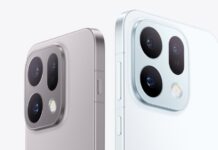
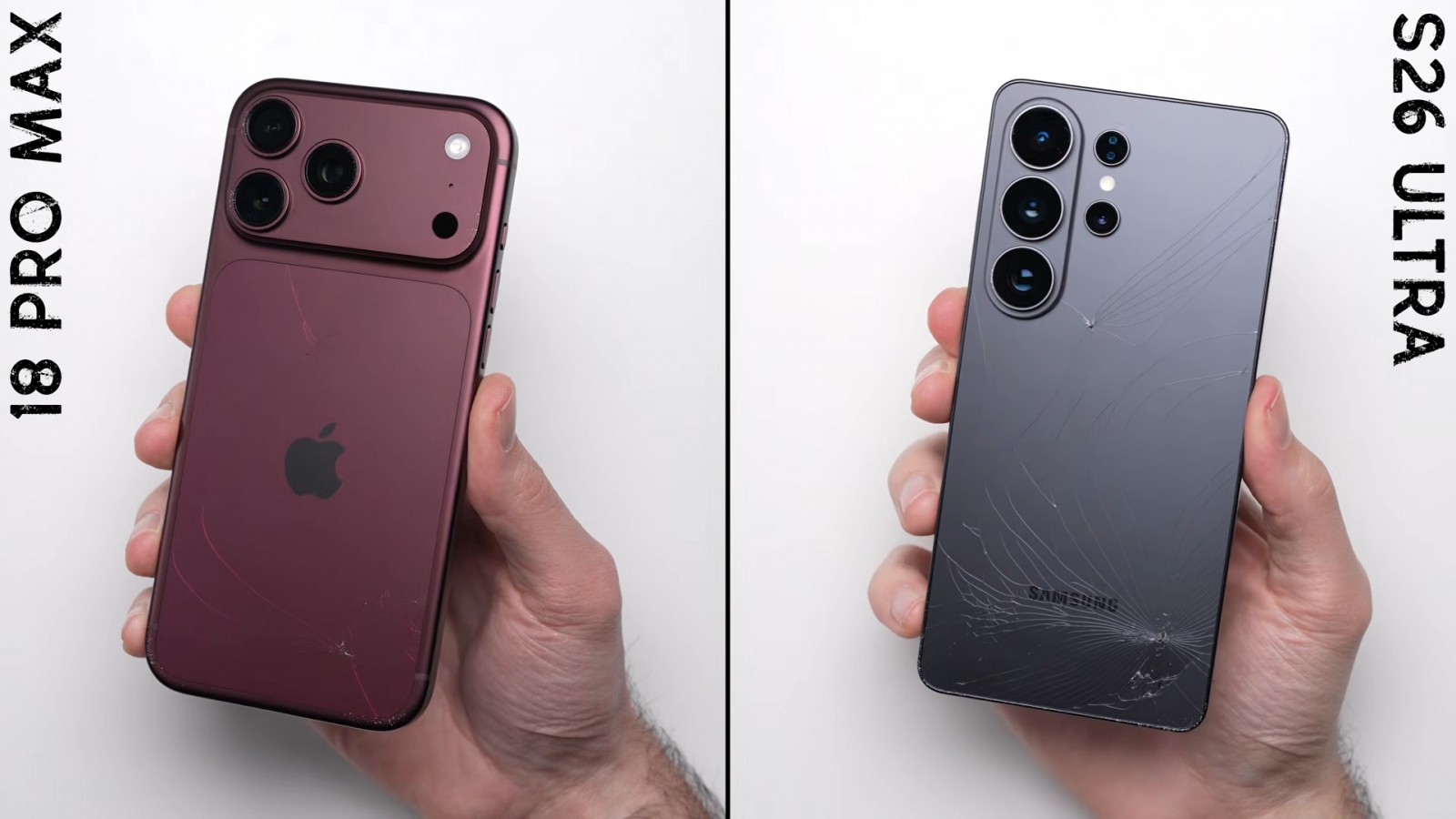
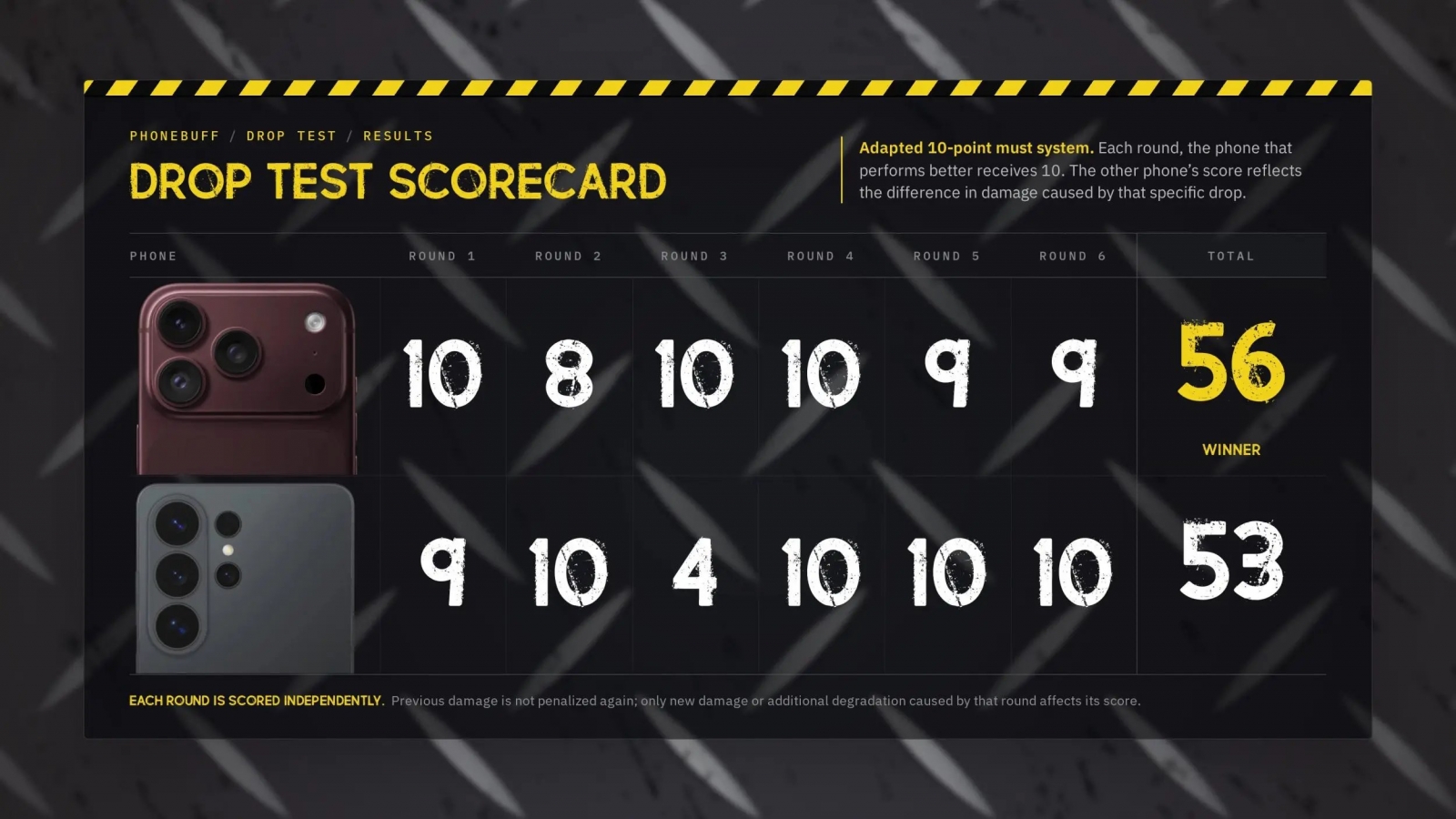
The iPhone 18 Pro Max narrowly beat the Galaxy S26 Ultra in PhoneBuff’s controlled drop test, scoring 56 points to Samsung’s 53. The critical separation came in the face-down test: Apple’s display remained intact, while the Galaxy’s front glass cracked and its under-display fingerprint sensor no longer worked properly.
The test used a mechanical rig to drop one unit of each phone, without a case or screen protector, onto concrete from several orientations. PhoneBuff assessed visible damage as well as whether hardware functions continued to work after each impact.
- Back-first drop from roughly 1 meter: both phones suffered cracked rear glass, with the Galaxy S26 Ultra showing more extensive damage.
- Corner drop: the Galaxy S26 Ultra emerged without visible marks, while the iPhone 18 Pro Max’s frame was dented.
- Face-down drop: the iPhone 18 Pro Max screen stayed intact; the Galaxy S26 Ultra’s front glass shattered and its in-display fingerprint reader was affected.
Later rounds produced mixed results, but the iPhone’s display performance in the face-down impact was enough to preserve its three-point lead. The results also show that neither flagship held a clear advantage in every failure scenario: Samsung performed better in the corner impact, while Apple had the stronger result when the display met the concrete.
As with any single-device durability test, the result is not a guarantee of how either model will fare in an everyday accident. Impact angle, the landing surface and pre-existing damage can substantially change the outcome.