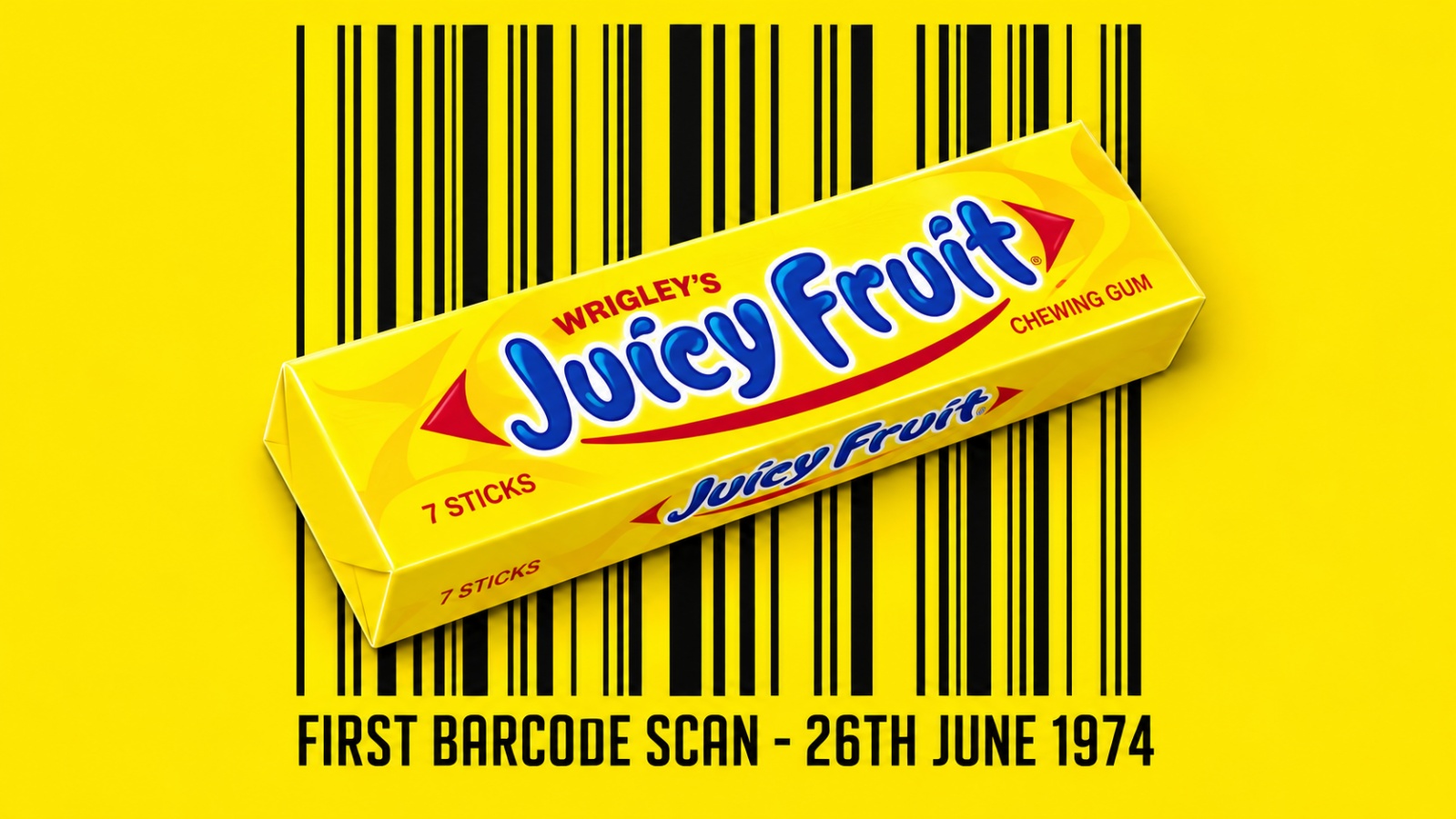
A 10-pack of Wrigley’s Juicy Fruit gum priced at 67 cents became the first product purchased through a commercial UPC barcode scan on June 26, 1974. The transaction at a Marsh supermarket in Troy, Ohio, demonstrated how a standardized product identifier could connect a physical item to a computerized retail system.
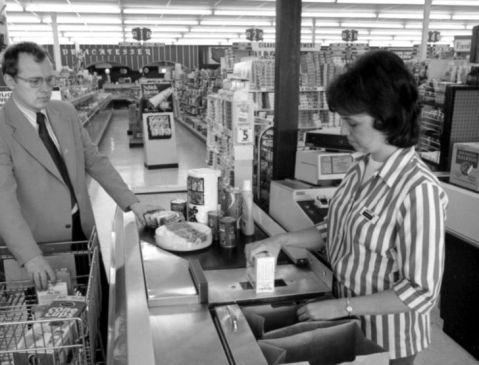
Marsh research and development director Clyde Dawson selected the gum from his basket at 8:01 a.m., and cashier Sharon Buchanan scanned it. The small package was a deliberate test case: its size had raised questions over whether a barcode could be printed accurately enough for automatic reading.
The barcode itself did not contain the price. It identified the product, allowing the store’s computer system to retrieve its name and price from a database. That separation meant retailers could update pricing centrally rather than changing product packaging, while every sale could feed into stock and demand records.
- More accurate inventory records based on products actually sold
- Replenishment decisions tied to real sales data
- Faster checkout and fewer manual-entry errors
- Demand analysis based on transaction-level information
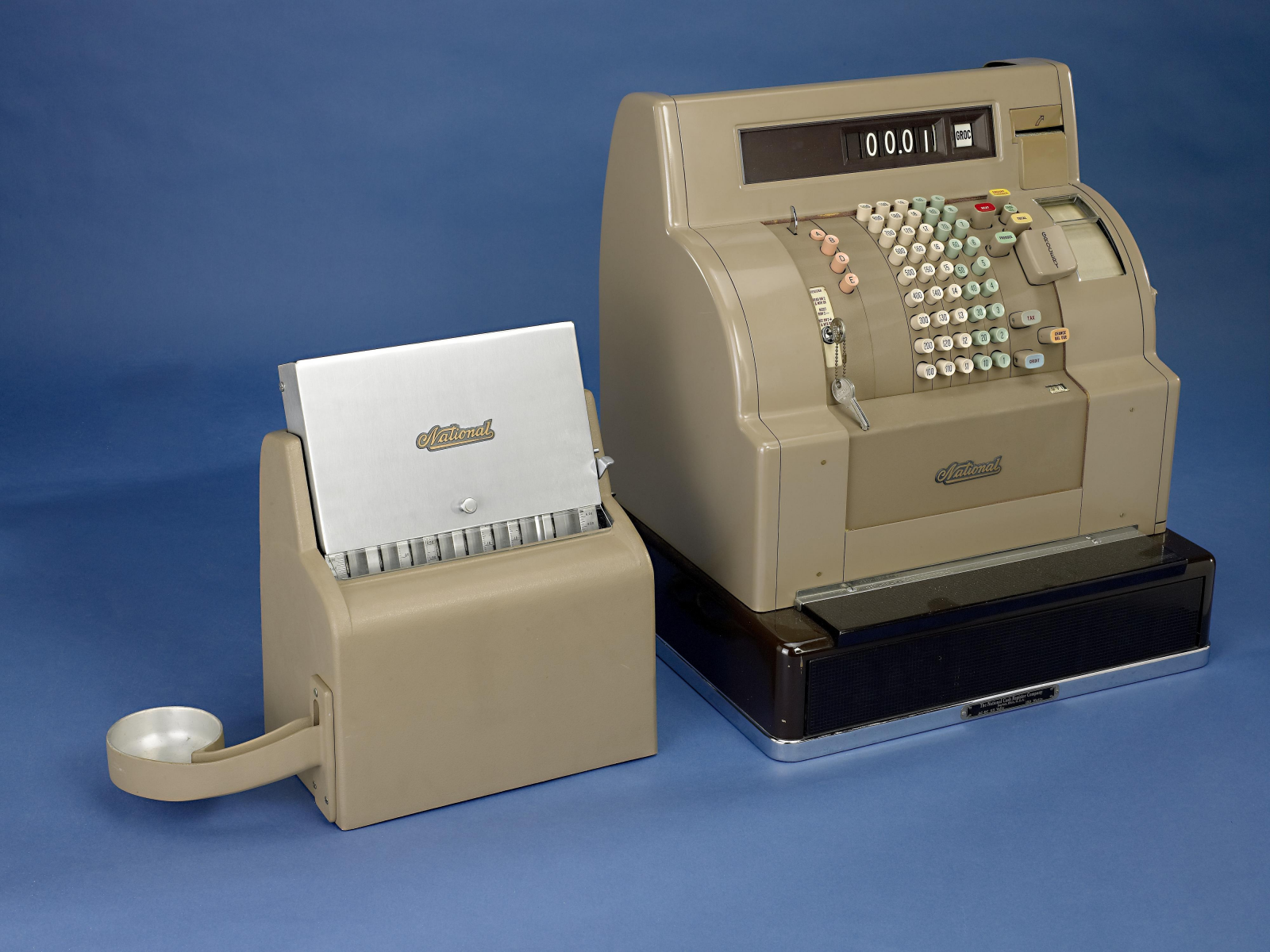
IBM estimates that UPC-based systems made checkout lines about 40% faster. The first Marsh installation used a Spectra-Physics Model A scanner developed with NCR, which supplied the computerized cash register; it was not an IBM scanner. A helium-neon laser was directed through a rotating mirror and the scanner’s glass window, while a photodiode detected light reflected from the barcode.

A standard decades in the making
The path to that checkout counter began in 1948, when Bernard Silver and Norman Joseph Woodland began working on automatic product identification. Their initial design used a circular bull’s-eye pattern intended to be readable from multiple directions. They received a patent in 1952, but the available technology was too expensive and complex for commercial deployment; the patent was later sold for $15,000.
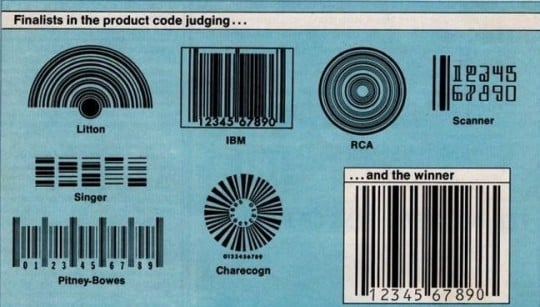
The U.S. grocery industry later needed a common standard, and IBM engineer George Laurer developed the linear UPC format adopted in 1973. Retailers needed scanners and computer systems, manufacturers needed to print the code, and the wider supply chain needed to use the same identifier before the approach could scale.
That scale is now global. GS1 estimates that more than 1 billion products use GS1 barcodes and that the codes are scanned more than 10 billion times each day worldwide.
The next barcode transition
The retail industry is now preparing a shift from conventional linear barcodes to GS1-based QR and other 2D codes. These can carry or link to additional product data, including ingredients, allergens, origin, recycling information, traceability details and expiration dates. GS1 is targeting broad point-of-sale readability for 2D codes by the end of 2027.
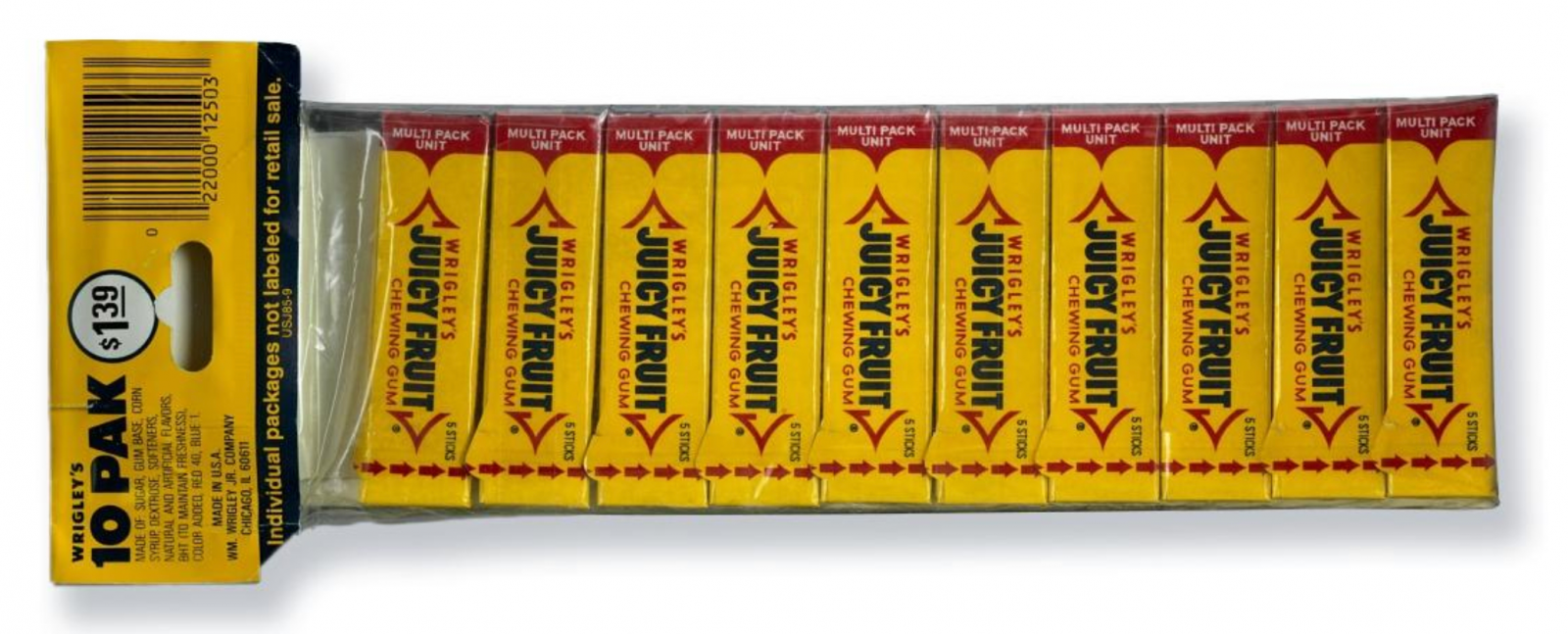
The original first-scanned pack is not known to be in the Smithsonian’s collection. The museum holds a 1974 Juicy Fruit pack donated by Dawson and one of the scanners associated with the Marsh installation, but says the exact item used in the historic transaction remained with Dawson. The next major retail milestone is therefore not another museum artifact, but whether 2D codes reach the same universal checkout acceptance that UPC established.