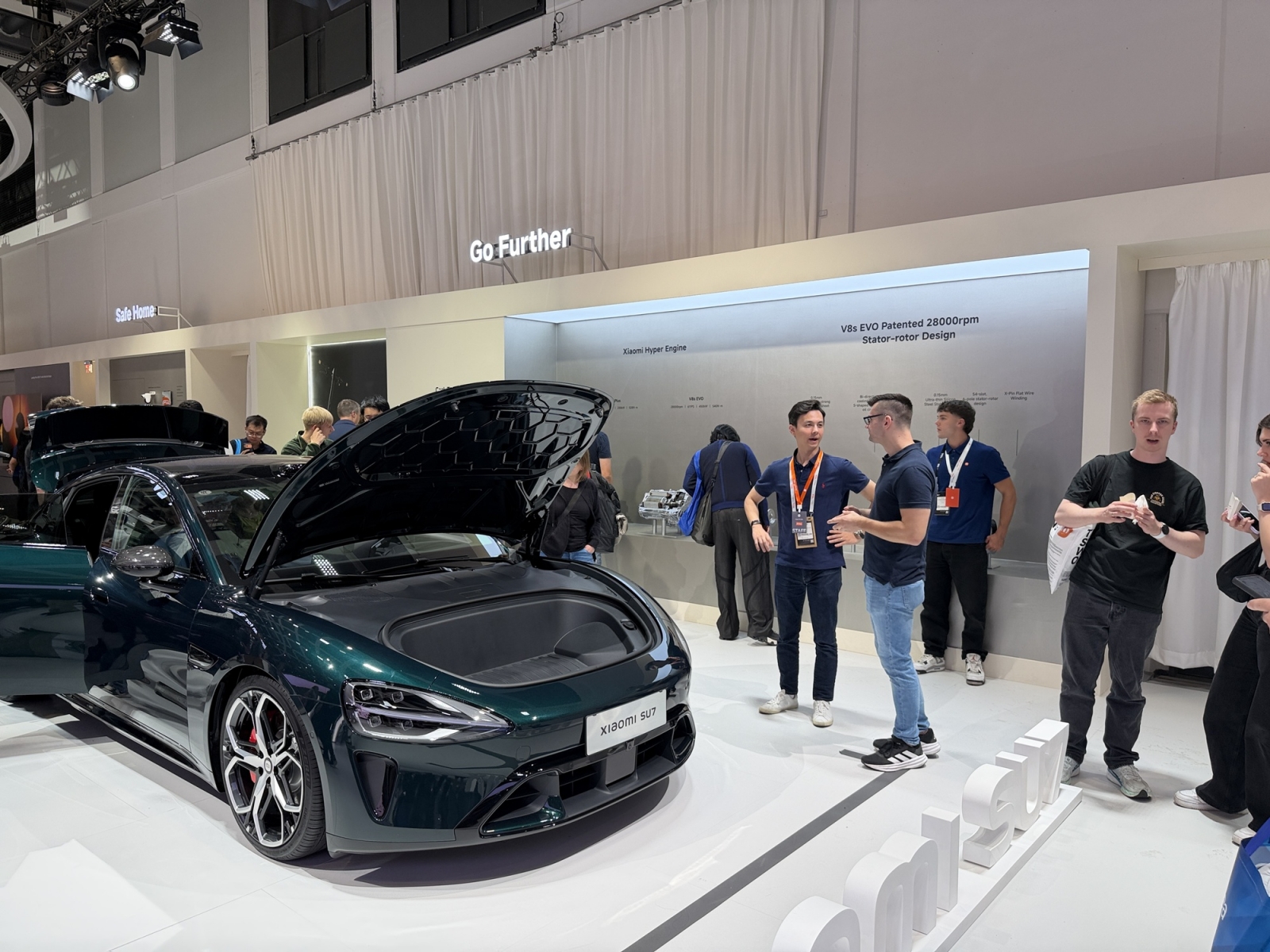
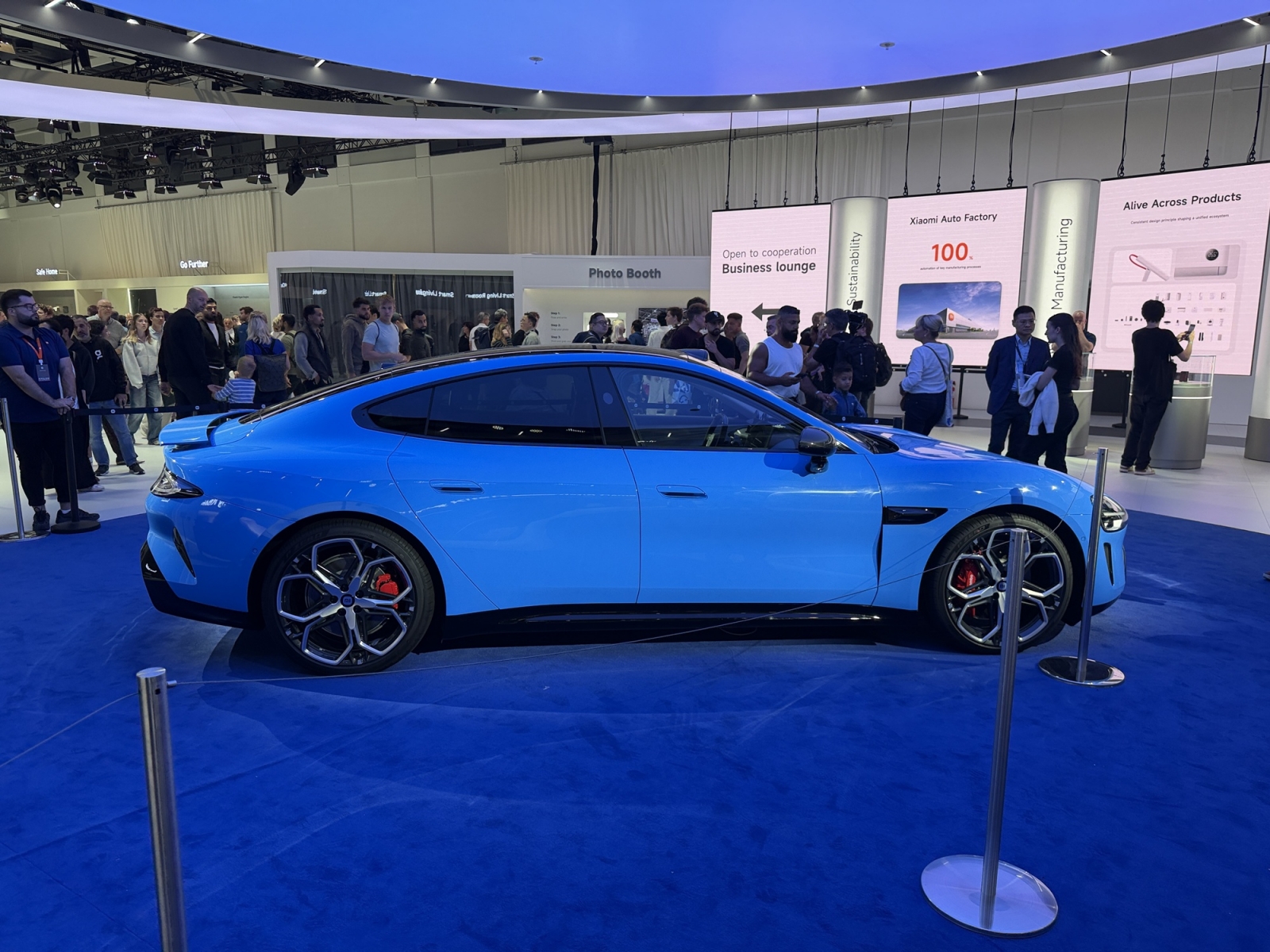
Xiaomi turned its first IFA appearance into a 3,300-square-meter demonstration of its Human × Car × Home ecosystem, displaying more than 380 products across phones, connected home devices, major appliances, televisions and vehicles. The most consequential long-term point for Europe is Xiaomi’s stated plan to bring its automotive business to the continent in 2027, with Germany among its initial footholds.
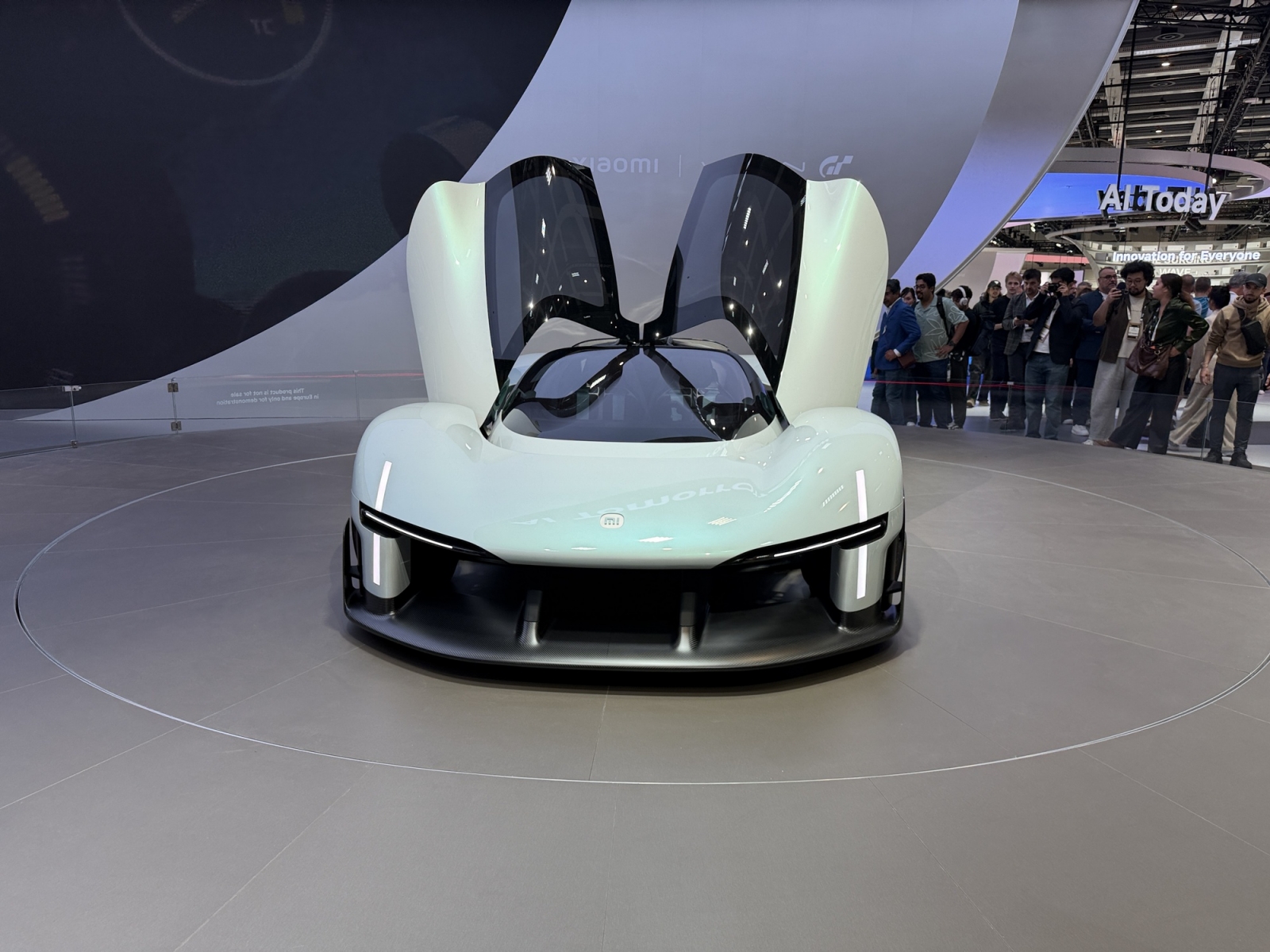
The automotive area included Xiaomi production vehicles, HyperEngine powertrain components and the Xiaomi Vision Gran Turismo concept. The latter is a separate concept created for Polyphony Digital’s Vision Gran Turismo project, rather than a version of the SU7 Ultra. Xiaomi describes its cabin concept as a “Sofa Racer,” combining a performance-oriented driving position with a more comfort-focused cockpit, while the exterior uses carbon-fiber elements and extensive aerodynamic channeling.
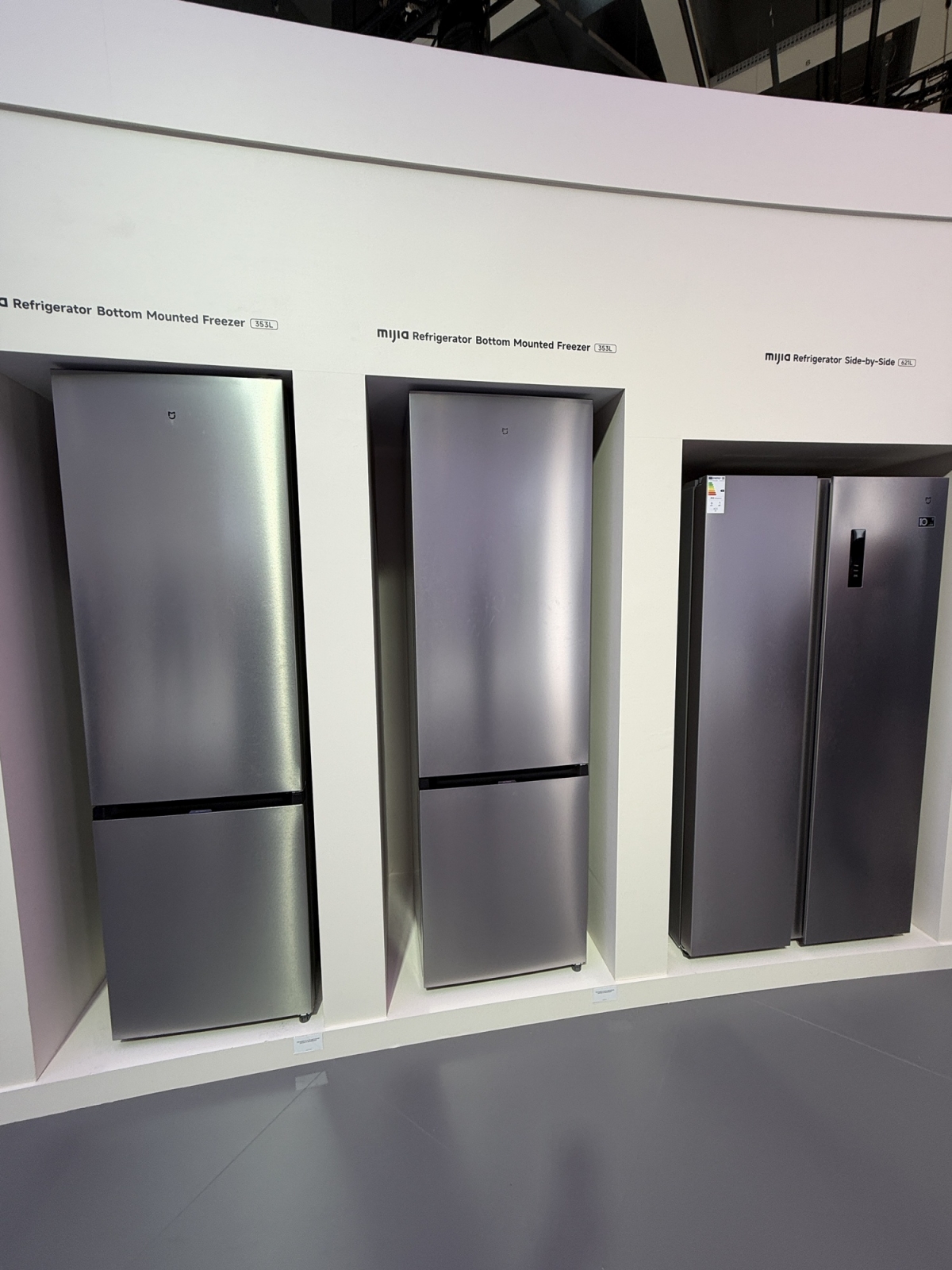
For nearer-term European availability, Mijia was a central part of the presentation. Xiaomi built out room-scale kitchen, bedroom and living-room installations to show how appliances and smart devices connect through Xiaomi Home. The Mijia Cross Door refrigerator offers 502 liters of capacity in a 60 cm-deep body, with an i Fresh compartment operating between -1°C and 5°C and app controls through Xiaomi Home.






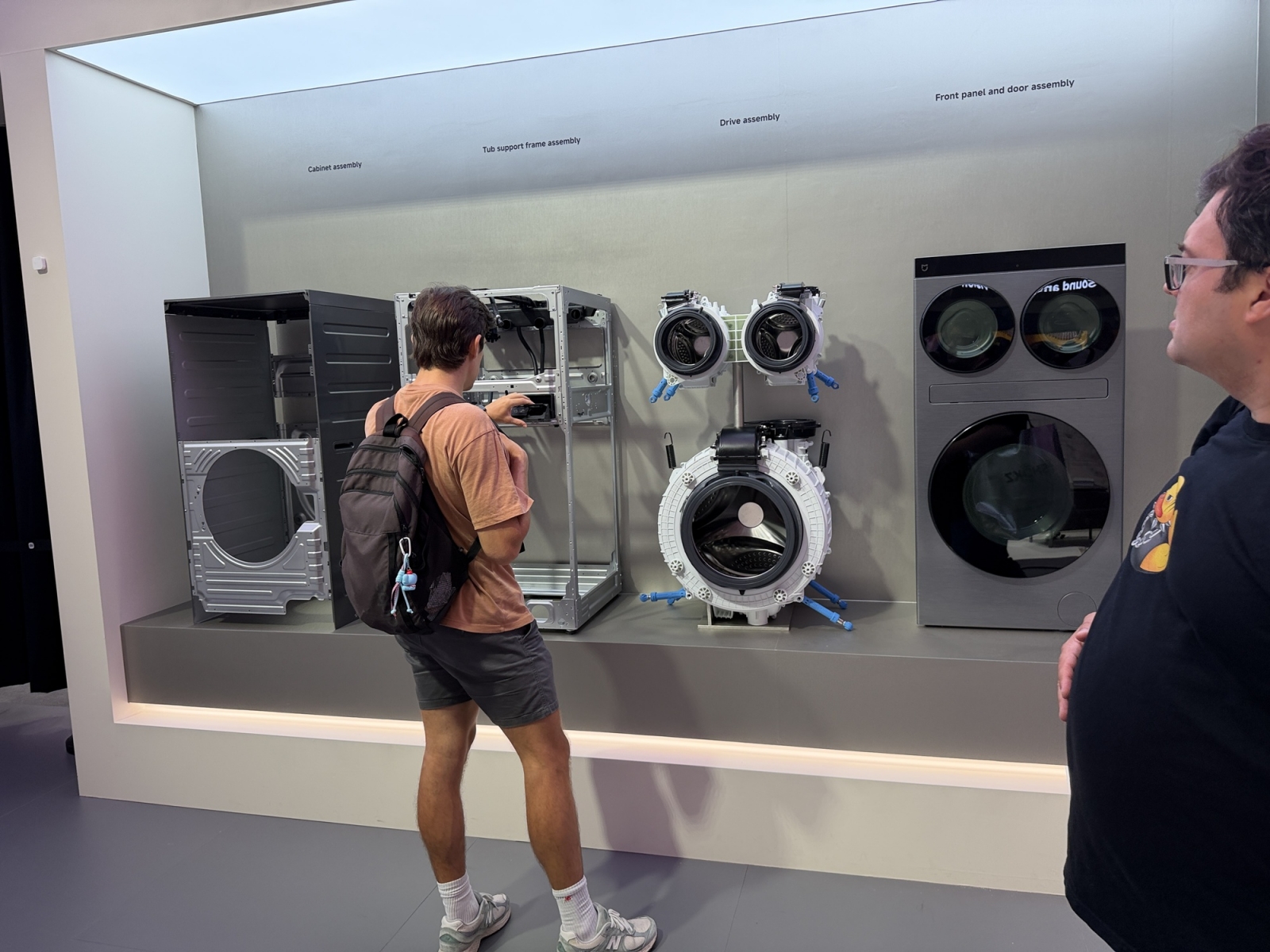
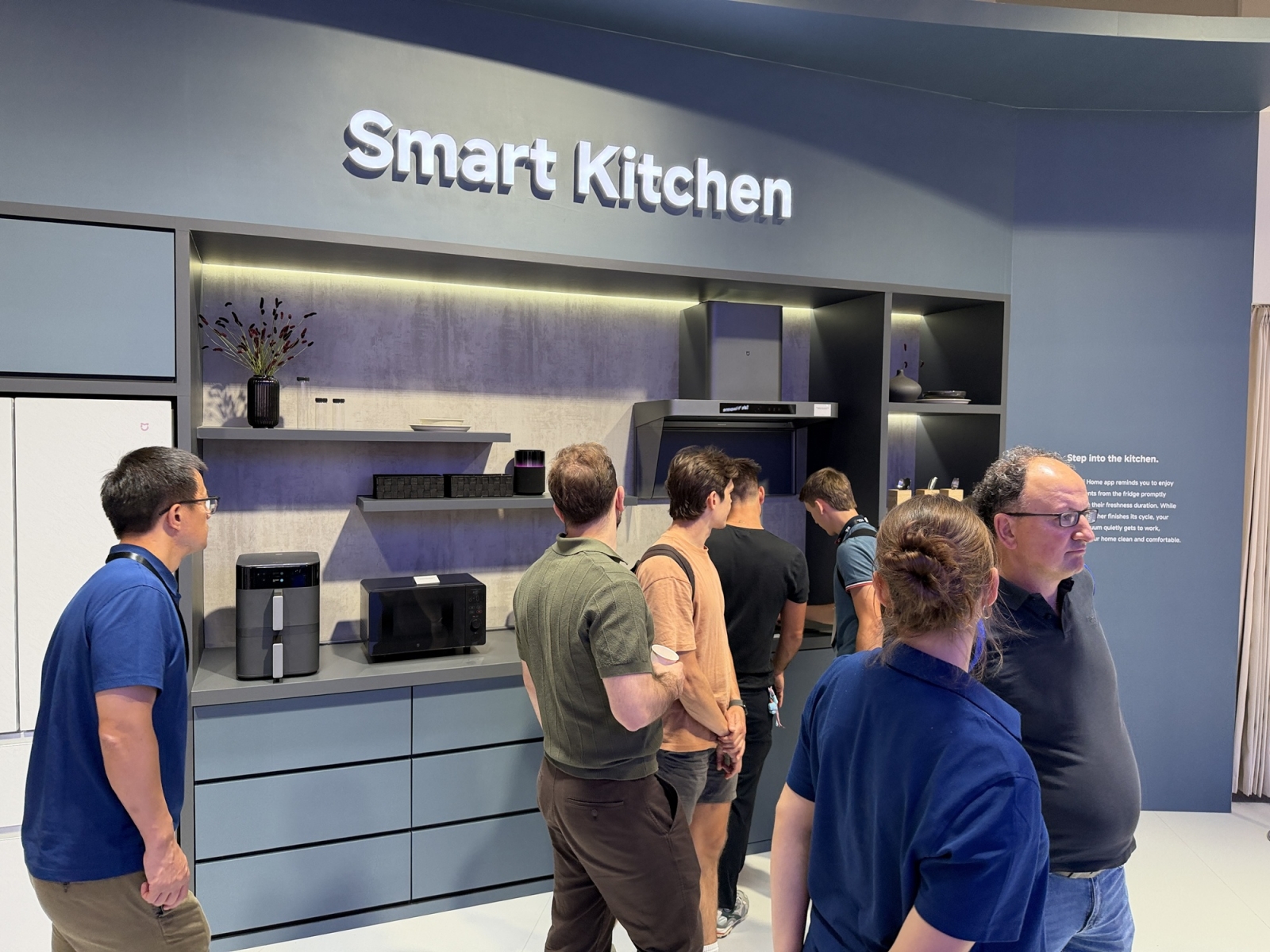
Other connected-home hardware included the Mijia Air Conditioner Pro Eco, which has an AI mode intended to reduce energy consumption and airflow designed to avoid blowing directly at the user. Xiaomi also showed kitchen products, dishwashers, air fryers, ovens, cooktops, coffee machines, air purifiers, displays, speakers, cameras and video doorbells as part of the same platform.
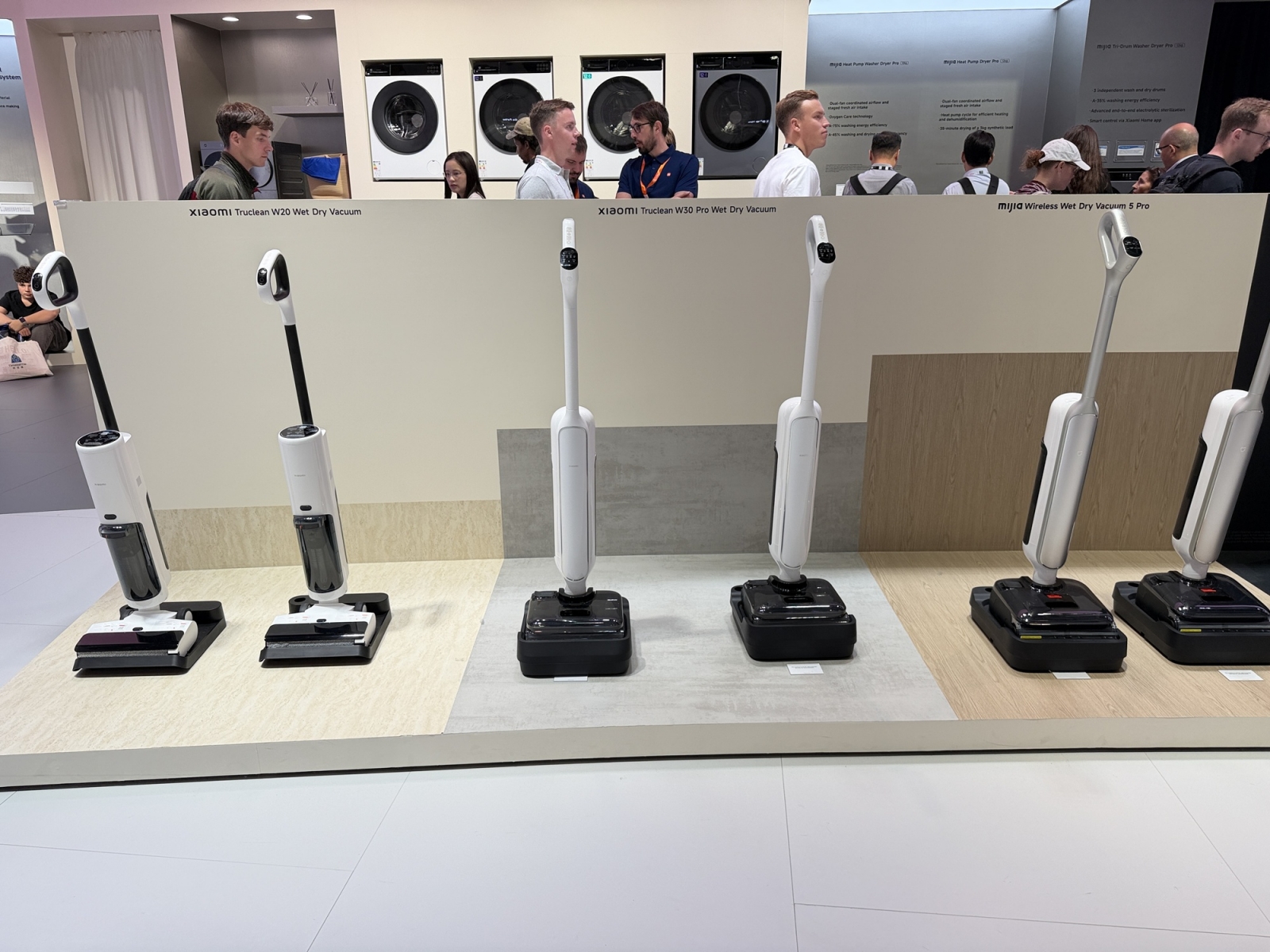
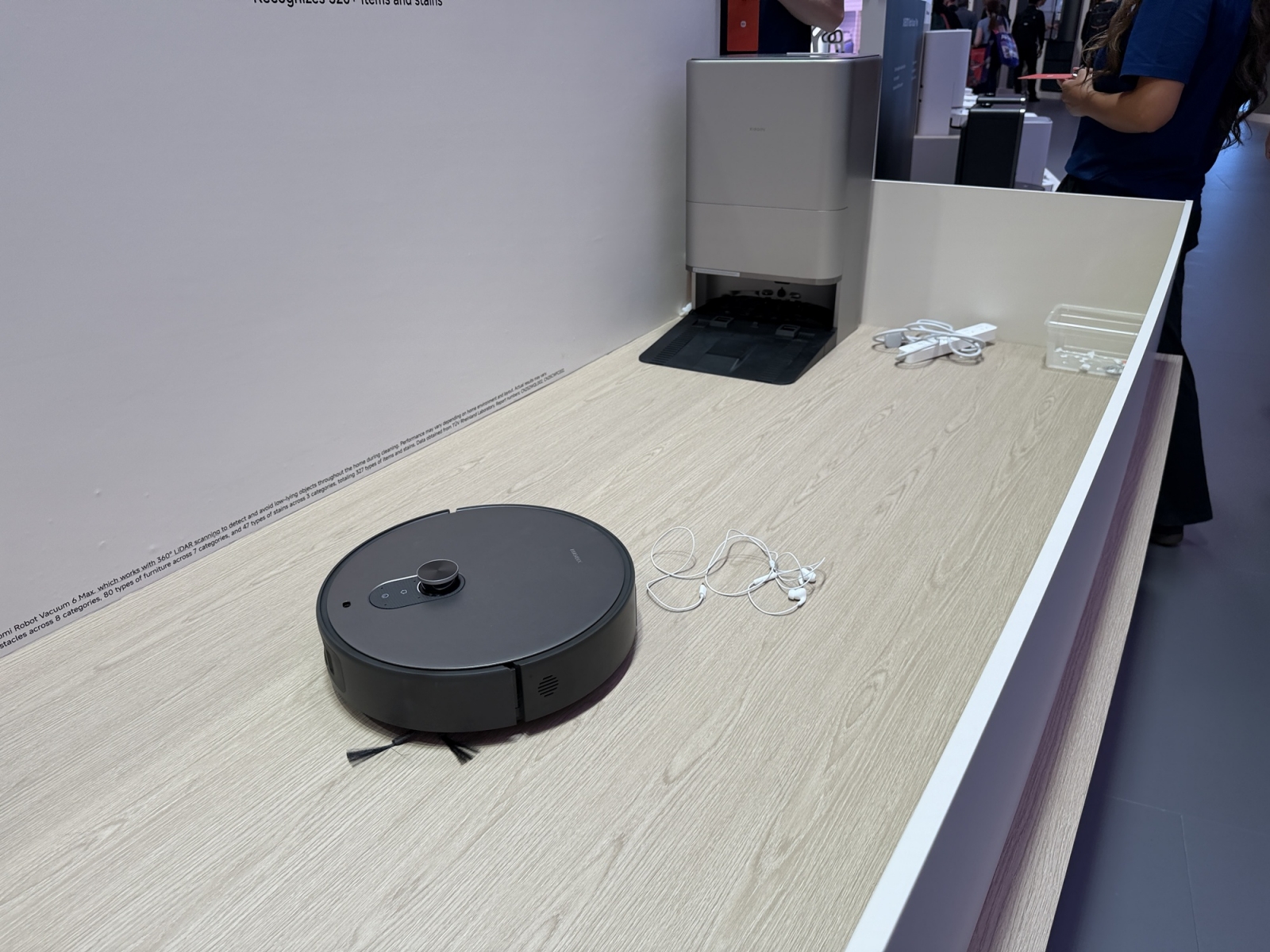
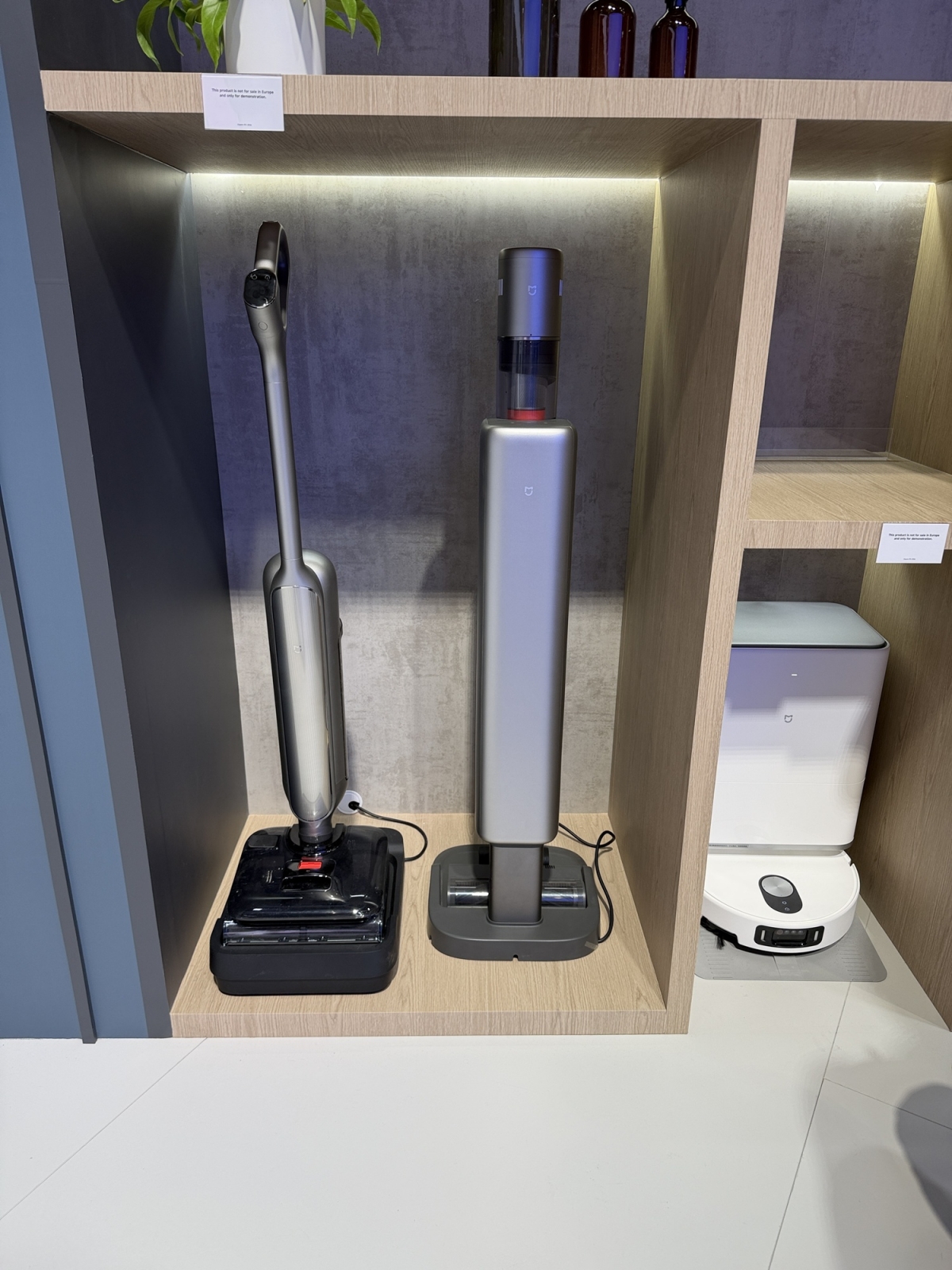
Cleaning products occupied a substantial section of the stand. Xiaomi Robot Vacuum 7 Max was on display after receiving an IFA Innovation Award, although Xiaomi had not published a complete global specification sheet at the time. The company also highlighted the Mijia Wireless Wet Dry Vacuum 5 Pro, which combines up to 26,000 Pa of suction with steam cleaning at up to 160°C and roller self-cleaning using water heated to 100°C. It is distinct from the lower-tier Xiaomi Truclean W20.












Xiaomi’s TV display included an ultra-thin Micro RGB technology demonstration with a matte surface intended to reduce reflections. Xiaomi did not attach a commercial product name or launch schedule to that technology. Alongside it was the Xiaomi TV S Pro Mini LED 2026, featuring QD-Mini LED technology, a native 144 Hz refresh rate and a Game Boost mode that can raise the refresh rate further in certain modes.
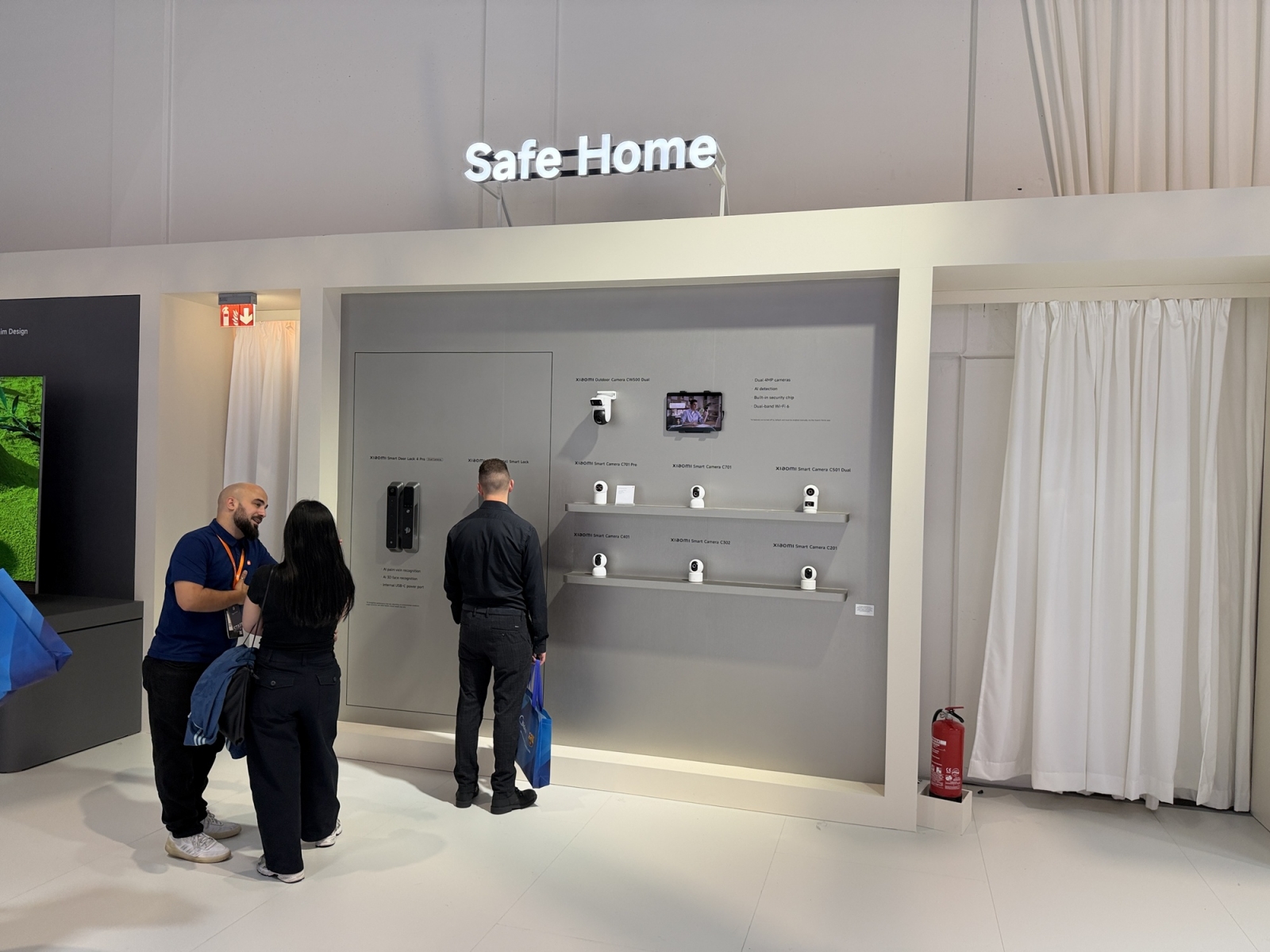
At the smart-security display, the Xiaomi Smart Door Lock 4 Pro demonstrated several entry methods, including a camera, facial recognition, fingerprint recognition, NFC, passcodes and palm-vein recognition.

Mobile devices remained part of the show, led by the Xiaomi 18 Fold, which was displayed behind glass rather than available for hands-on use. The foldable has a wider, shorter form factor than the Galaxy Z Fold8, three rear cameras and Xiaomi’s XRING O3 chipset. Its China debut was scheduled for September 7 at the time of the IFA presentation.
Xiaomi 17 Pro and 17 Pro Max units with rear secondary displays also appeared at the booth. A company representative said the models were expected to reach Europe, but Xiaomi had not publicly announced a European launch at that point. If confirmed, it would mark a notable change for the Pro models with rear displays, which have largely remained China-focused so far.

The IFA showcase makes Xiaomi’s European strategy broader than a smartphone-and-wearables push: HyperOS and Xiaomi Home are positioned as the connective layer for household products today, with vehicles set to become part of that proposition when the company’s planned European automotive expansion begins in 2027. The outstanding question is whether the Xiaomi 18 Fold will move beyond its display case and receive wider-market launch details after its China debut.