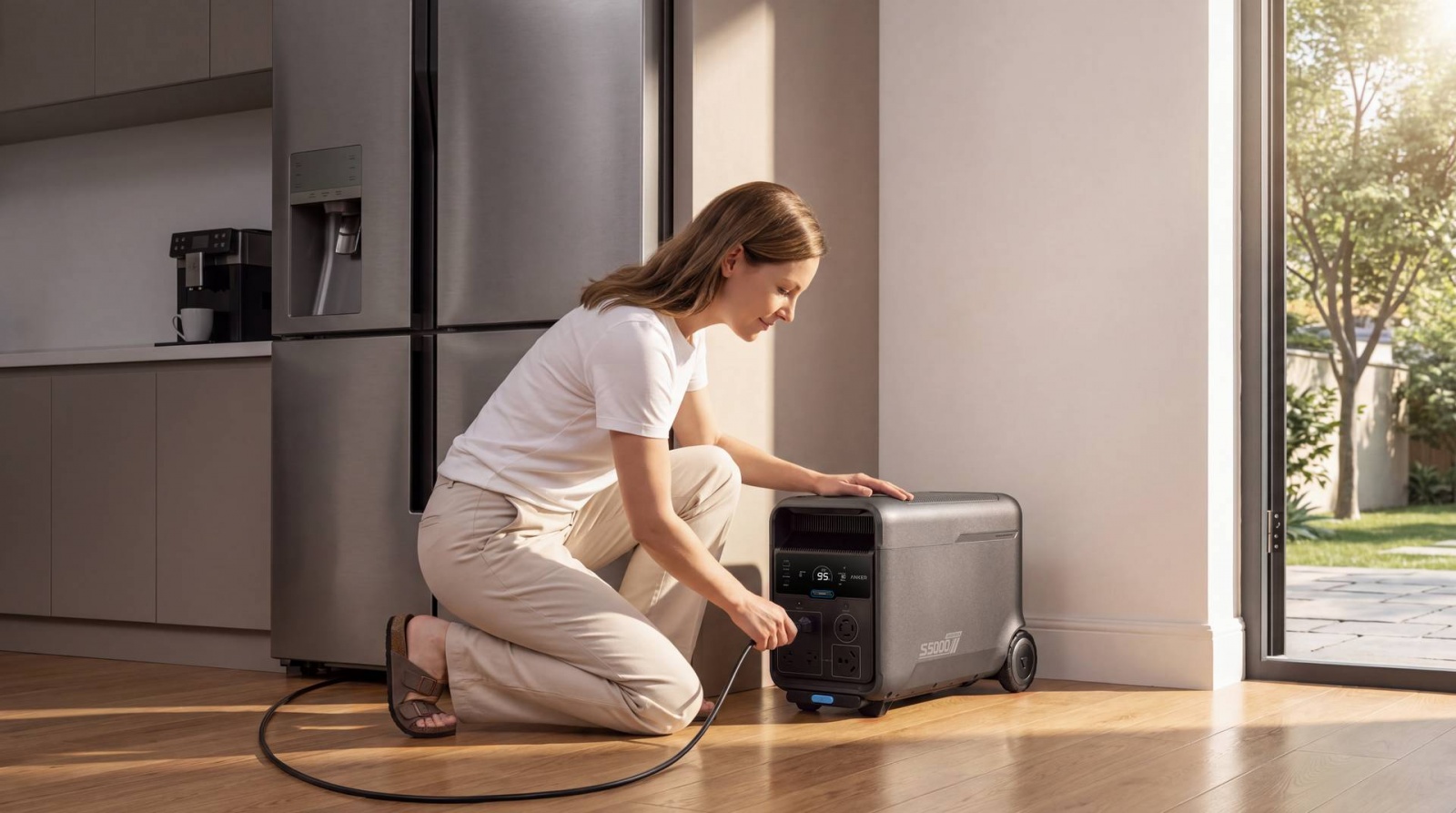
Anker has unveiled the SOLIX S5000, a 5,024Wh portable power station designed to keep essential household equipment running through an outage. It supplies 4,500W of continuous power, reaches 8,000W at peak load and can be expanded to 30kWh with additional battery packs.
Anker positions the unit as providing roughly 48 hours of backup for selected essentials rather than an entire home operating at full load. Its company test setup included a refrigerator, Wi-Fi router, coffee maker, lighting and a phone. Anker also says a large refrigerator could run for up to 86 hours, while a window air conditioner could operate for about 25 hours; real-world runtimes will depend heavily on the connected appliances and their power draw.
The S5000 uses a 314Ah LFP battery and is rated for 6,000 cycles before reaching 80% of its original capacity, or 10,000 cycles before reaching 60%. Anker estimates a service life of up to 15 years under certain usage conditions. Its OptiSave 2.0 system is intended to reduce the station’s own consumption at low loads, with 120V output idle consumption listed at 8.8W.
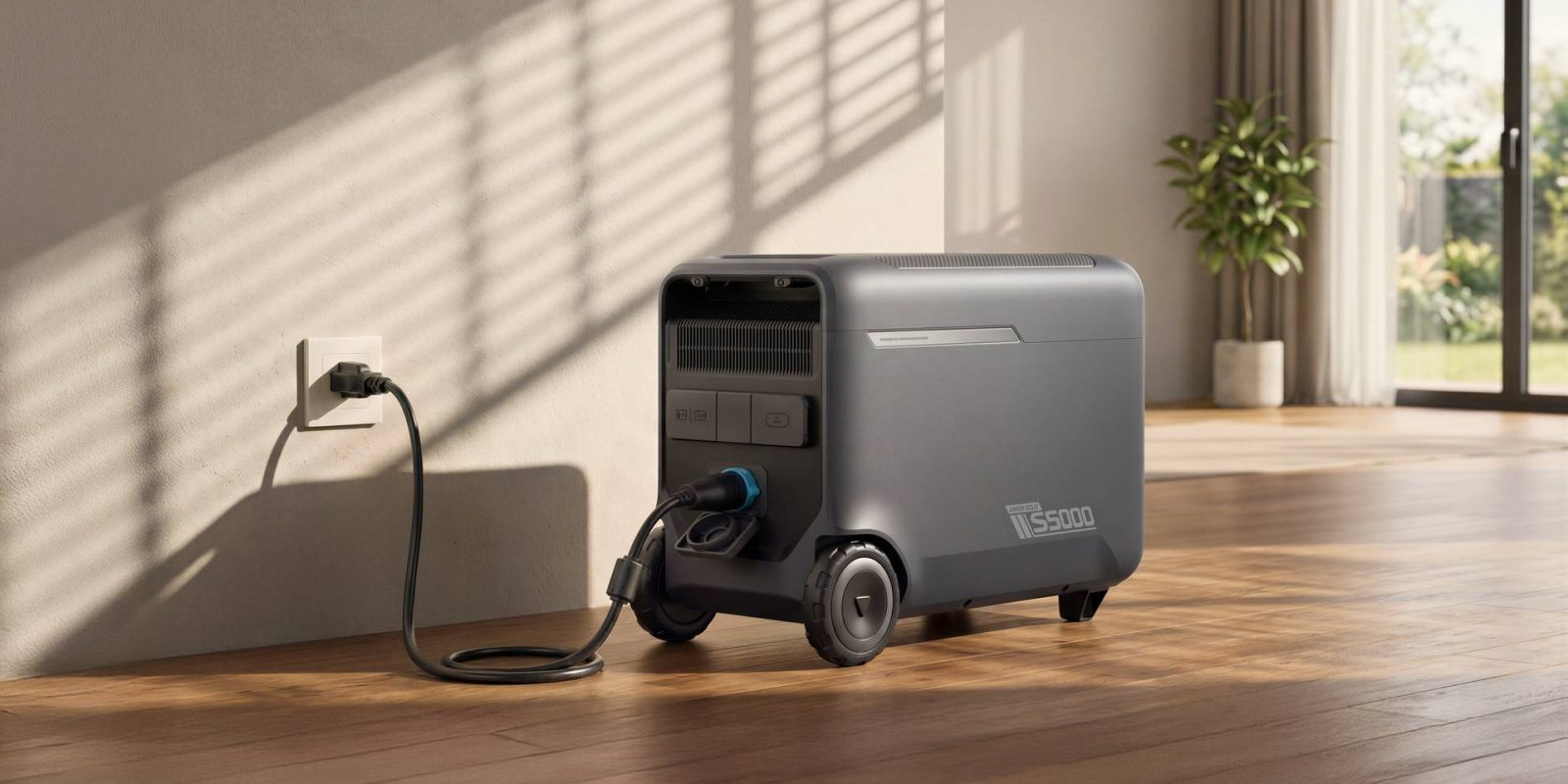
Home-backup features in a portable chassis
For backup applications, the station has a UPS switchover time of up to 10 ms. It accepts up to 3,000W of solar input and can fully recharge in about 99 minutes when connected to a 240V, 4,500W power source, according to Anker.
- Capacity: 5,024Wh
- Battery: 314Ah LFP
- Continuous output: 4,500W
- Peak output: 8,000W
- Expansion capacity: up to 30kWh
- Solar input: up to 3,000W
- Maximum charging power: 4,300W
- UPS switchover: up to 10 ms
- USB-C output: up to 100W
- Weight: about 44 kg
- Noise level: up to about 30 dB under specified conditions
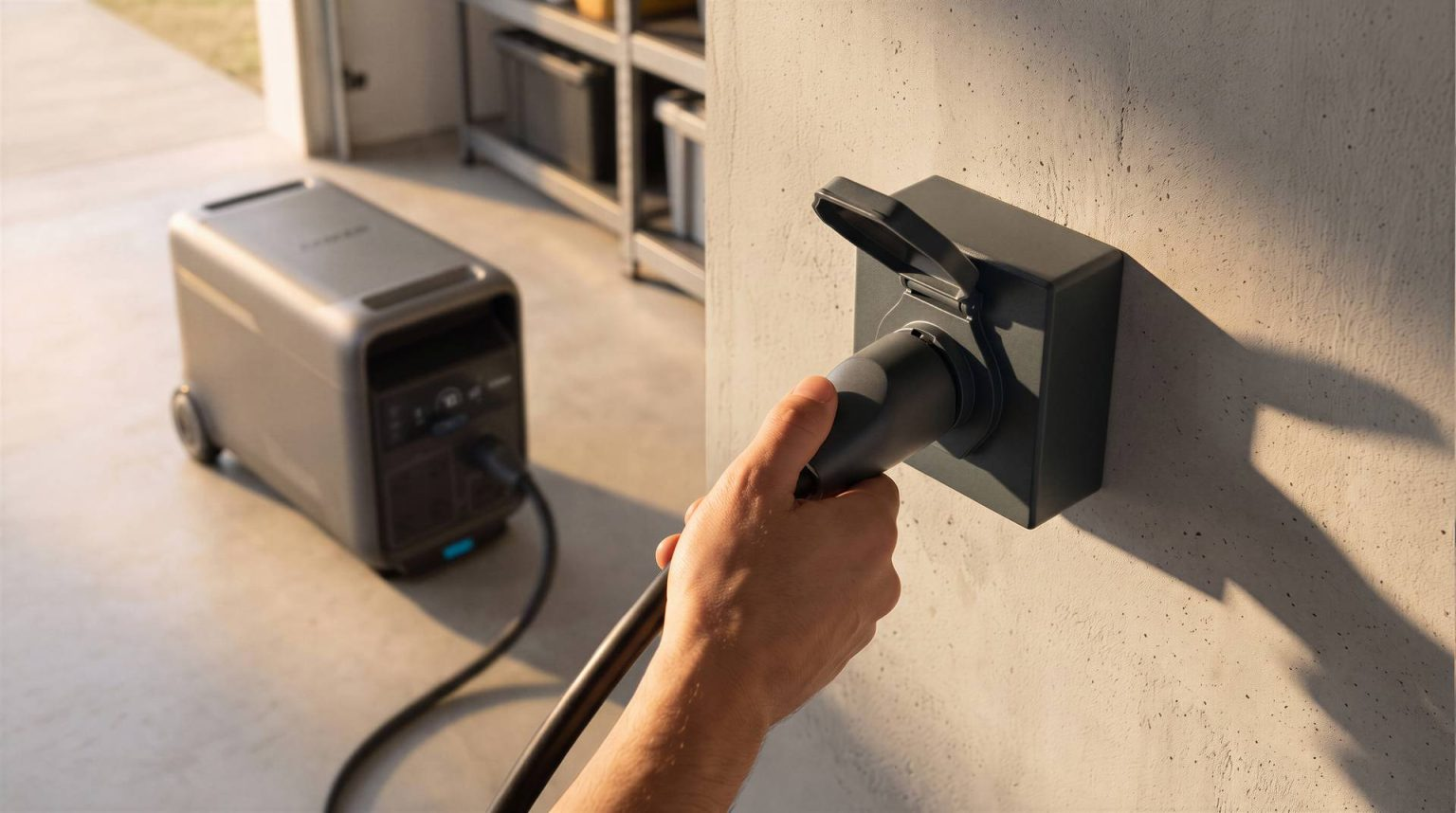
At about 44 kg, the SOLIX S5000 is not a one-hand carry device, so Anker has fitted it with wheels and a telescopic handle. The enclosure measures roughly 27 × 56 × 39 cm.
The US version goes on sale October 27 at an introductory price of $2,499.99, down from a stated regular price of $3,599.99. It uses 120/240V outputs and NEMA connectors. Anker has not announced a European S5000 variant, leaving availability outside the US and compatibility with other regional electrical standards unconfirmed.