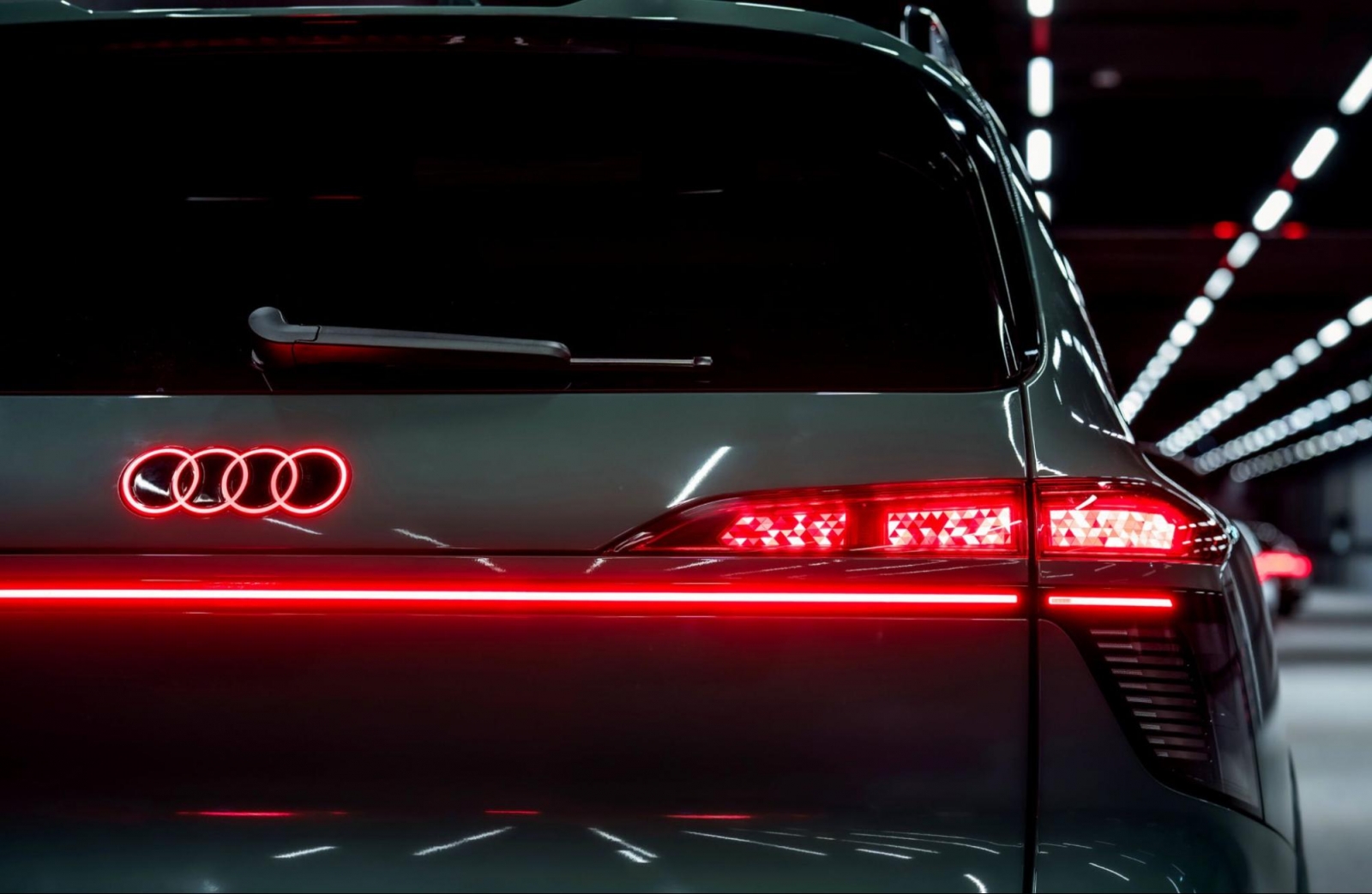
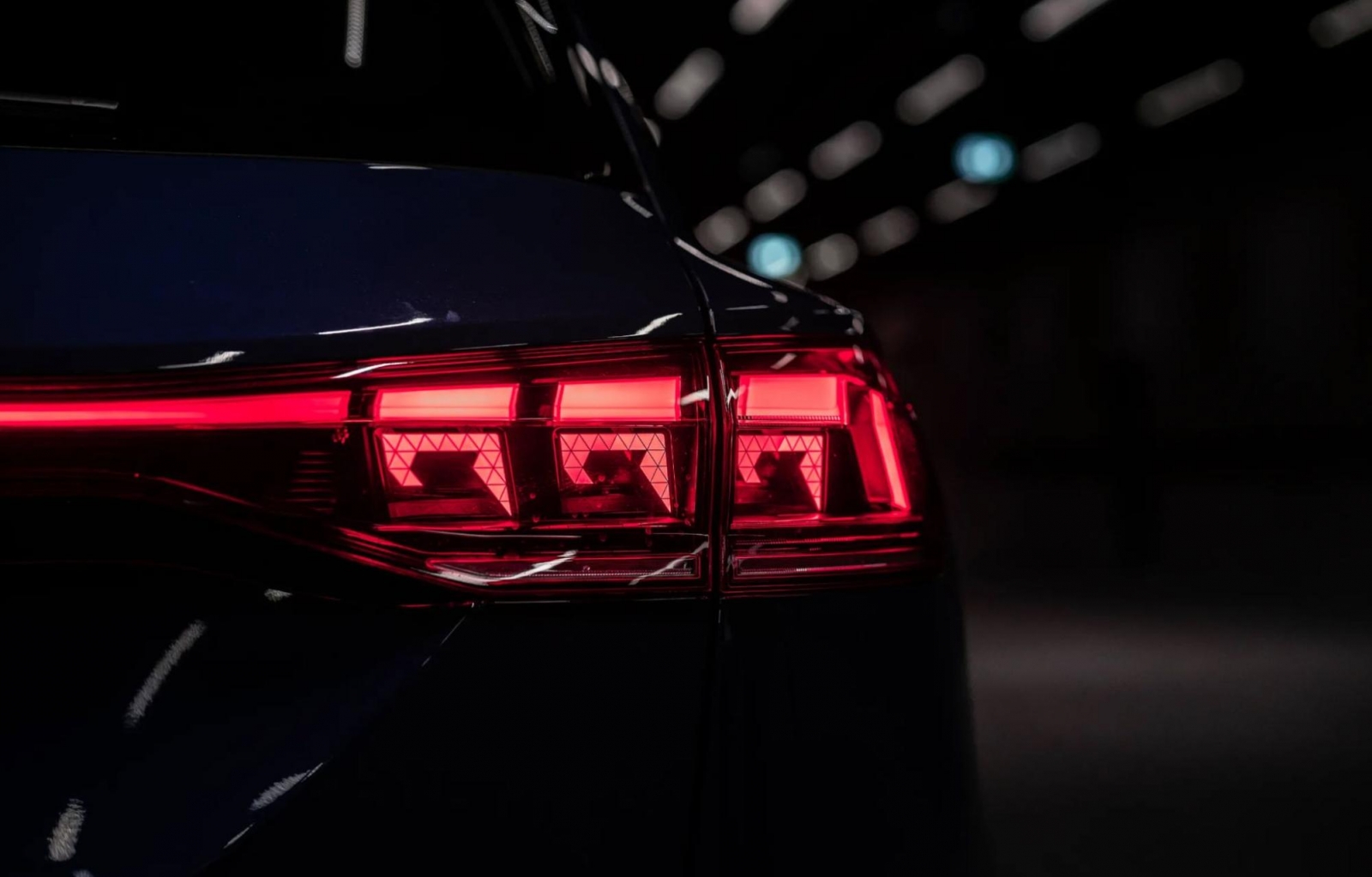
Audi has unveiled the Q9 with what it describes as the first digitally controlled OLED taillights on a production vehicle to use three-dimensionally curved panels. The rear-light system has 512 individually controllable segments and can display predefined warning symbols to following traffic.
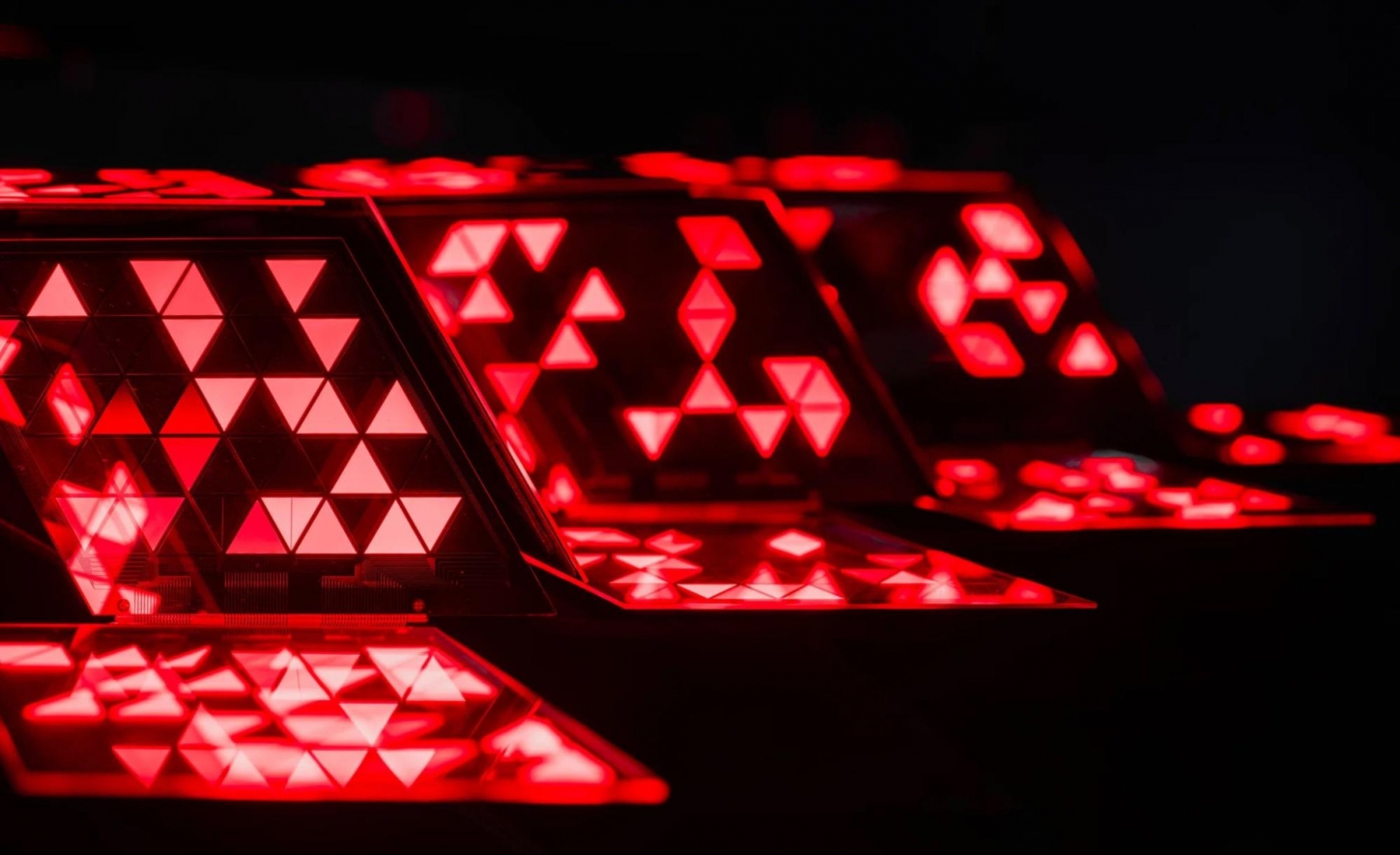
The OLED panels use glass just 0.1 mm thick, allowing the lighting elements to follow the bodywork toward the outer edges of the taillights. Audi says the curvature improves side visibility at wider viewing angles. The 512 segments are distributed across six OLED panels, with each curved outer panel containing 99 segments—the largest such panel Audi has used on a production model. The system supports up to eight front and rear lighting signatures, including partly animated designs with a three-dimensional effect.
These OLED units are not general-purpose displays for photos or video. Instead, their segments are used for preset light patterns and hazard indications, extending a vehicle-to-vehicle communication function previously introduced on the Audi Q6 e-tron.
- Emergency braking
- A vehicle breakdown
- An accident
At the front, the Q9 uses Digital Matrix LED headlights with a micro-LED module containing 25,600 individually controllable light points in a 13 mm-wide package. The headlights can adapt road illumination, project orientation markers in narrow areas or on dark roads, and cast a stylized turn signal onto the road at night to make a change of direction more noticeable to pedestrians and cyclists.


Audi has detailed the lighting hardware and its functions, but market-by-market availability, pricing and the exact trim configurations that include these systems remain to be confirmed.