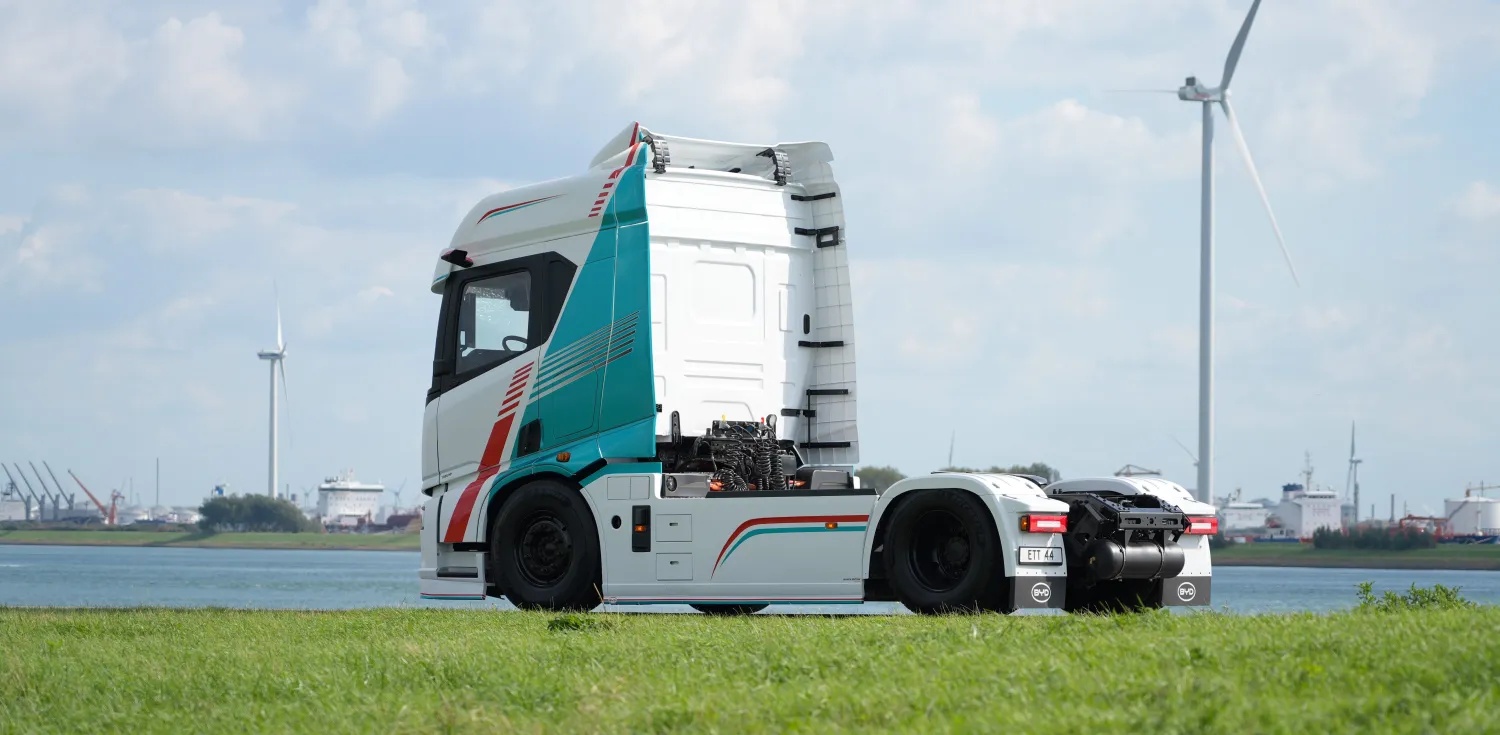
BYD has unveiled the ETT 44, a 4×2 electric tractor designed for combinations weighing up to 44 tons, with a claimed range of up to 600 km. Its defining feature is support for charging above 1.5 MW: BYD says its Megawatt Charging System can take the truck’s battery from 20% to 80% in roughly 20 minutes, potentially restoring about 400 km of range.
The truck was shown at IAA Transportation 2026 in Hannover. It uses a 651 kWh Blade battery and an 851 V electrical architecture, with BYD quoting 743 hp of rated output and up to 1,000 hp at peak. The battery warranty is listed at 10 years or 1.2 million km.
- Vehicle configuration: 4×2 electric tractor for gross combination weights of up to 44 tons.
- Battery: 651 kWh BYD Blade battery on an 851 V architecture.
- Power: 743 hp rated output, with up to 1,000 hp peak output.
- Claimed range: up to 600 km.
- Battery warranty: 10 years or 1.2 million km.
Charging performance differs sharply by connector. Using CCS2, the ETT 44 can accept up to 420 kW and needs about an hour for a 20% to 80% charge. BYD’s Megawatt Charging System cuts that same charging window to around 20 minutes. For long-haul fleets, the shorter stop could matter more than peak power figures, provided megawatt-capable charging infrastructure is available on relevant routes.
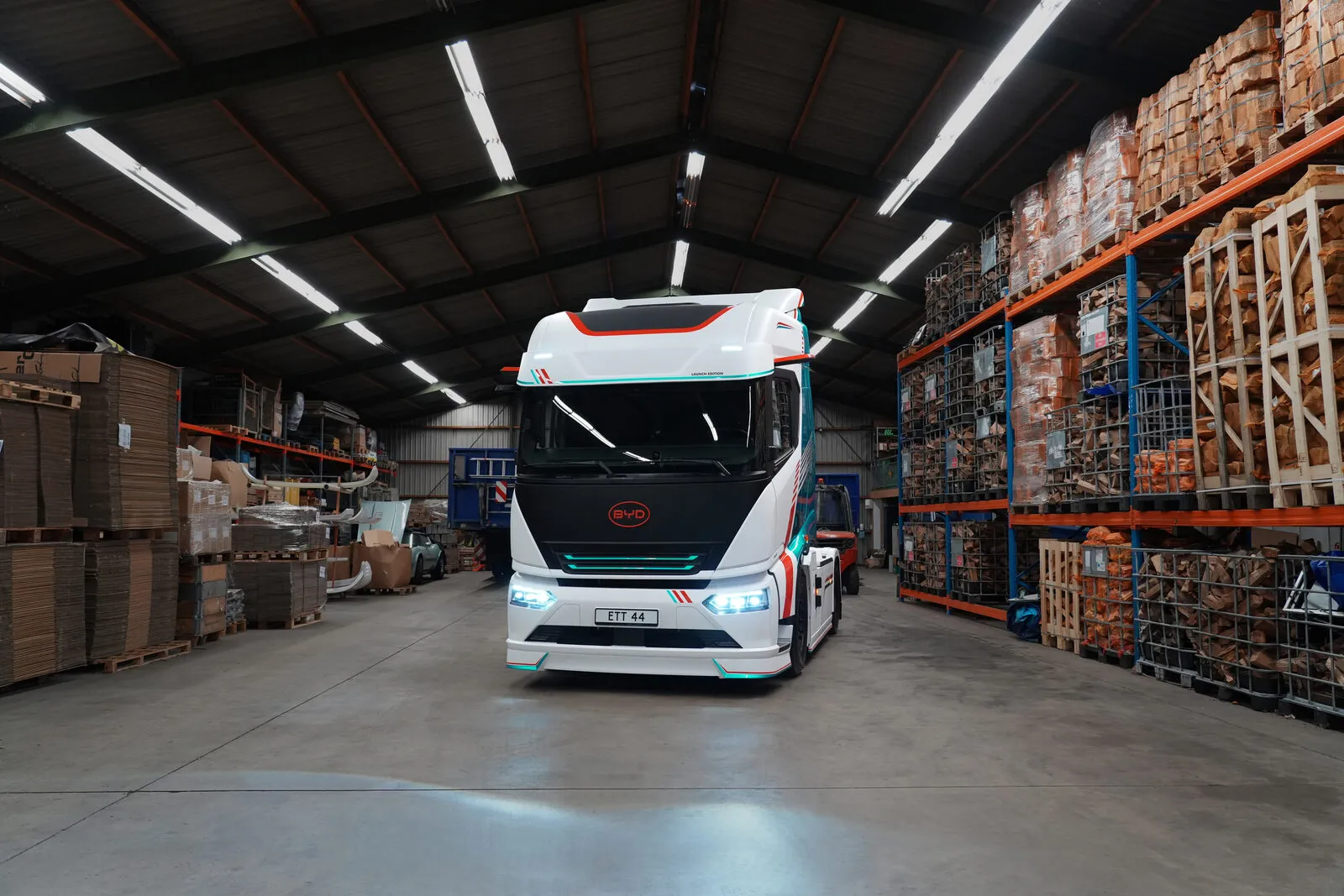
BYD is positioning the ETT 44 as part of a broader commercial-vehicle offering that also includes electric rigid trucks, the E-Vali electric van and the EYT 2.0 terminal tractor. The company says it can combine vehicles, Blade batteries, high-power chargers, stationary energy storage and financing in a single package.
- Daimler Truck eActros 600
- Volvo FH Electric
- Scania electric heavy-duty trucks
- MAN electric heavy-duty trucks
The ETT 44 enters a European heavy-duty EV market already served by established truck makers, but BYD’s 600 km range claim and megawatt-charging target set its intended competitive position. European deliveries are planned for the second quarter of 2027; the key remaining question is how quickly compatible high-power charging networks will expand for freight operators.