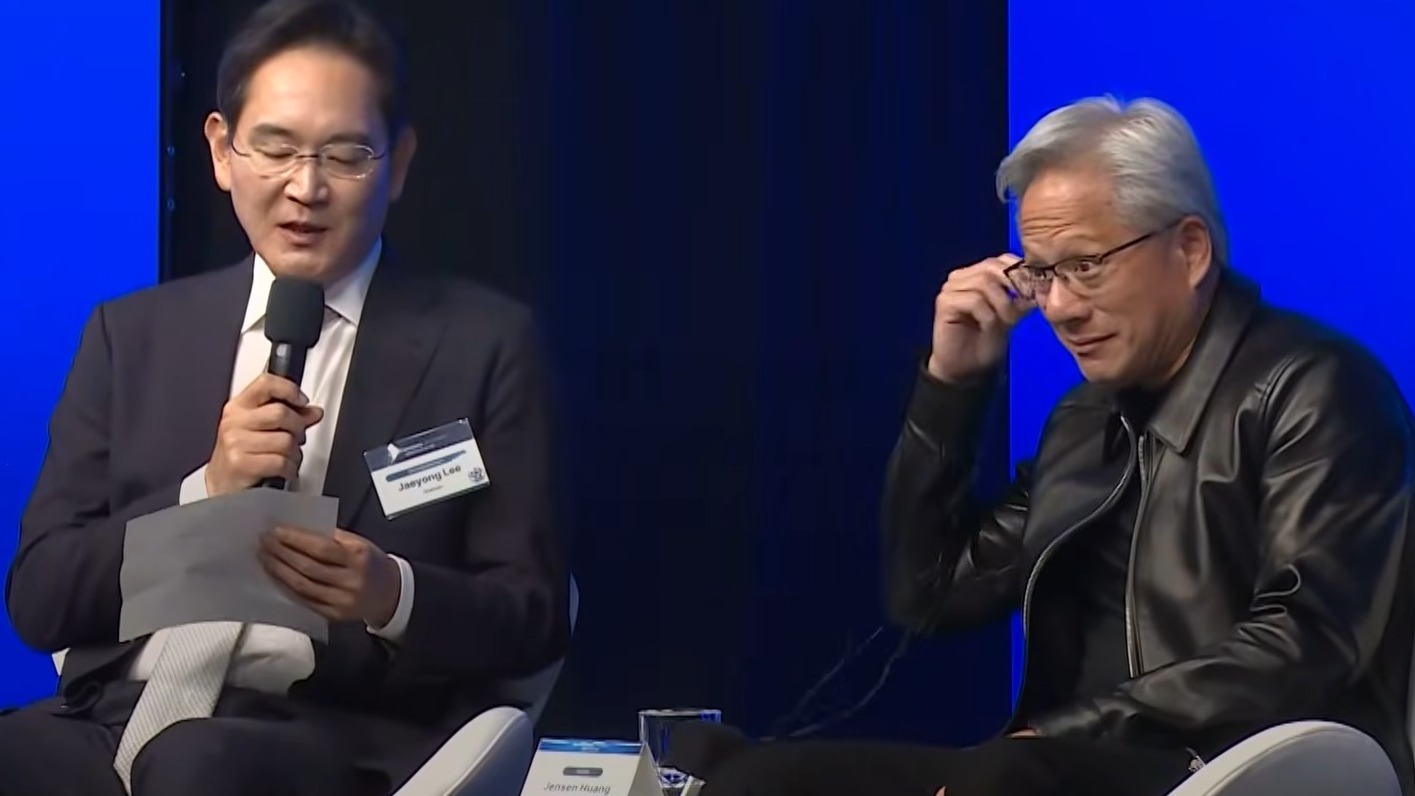
Nvidia CEO Jensen Huang has underscored the company’s dependence on South Korean chipmakers as demand for AI accelerator memory continues to climb. Speaking in New York after receiving The Korea Society’s Van Fleet Award, Huang said Nvidia’s three-decade relationship with Korean industry is set to continue, with Samsung and SK among the partners he trusts for components essential to the company’s growth.
I have worked with Korea for 33 years, and I will work with Korean companies for another 33 years.
Jensen Huang, Nvidia CEO
The strategic issue is high-bandwidth memory, or HBM. AI GPUs require large quantities of extremely fast memory positioned close to the processor, and Samsung and SK Hynix are among the limited group of suppliers able to manufacture it at the required scale. Huang told reporters that Nvidia needs more memory than ever and singled out Samsung and SK as companies it can rely on, according to Seoul Economic Daily.
HBM demand is also reshaping DRAM manufacturing priorities. Samsung has estimated that HBM could account for nearly 30% of global DRAM production capacity in 2027, up from roughly 20% currently. The company is moving part of its DDR5 output to partners to free more capacity for HBM production.
Samsung pursues a broader Nvidia role
The relationship may extend beyond Nvidia purchasing memory. In June, Samsung chip division head Jun Young-hyun confirmed direct discussions with Huang covering HBM4E, HBM5 and next-generation foundry manufacturing. Samsung and Nvidia also collaborate in automotive technology, while Samsung is set to manufacture LP30 chips based on Groq technology for new Nvidia AI accelerators.
Samsung is trying to close ground on SK Hynix, which established an early lead in the HBM boom. Samsung began sending HBM4E samples in May, only months after initial HBM4 deliveries, with Nvidia, AMD and Google named among the customers.
Huang also cited work with SK, LG and Hyundai across sovereign AI, factories, robotics and autonomous vehicles. But the emphasis on Samsung and SK points to the immediate constraint facing Nvidia’s expansion: securing enough advanced memory as AI infrastructure demand accelerates.