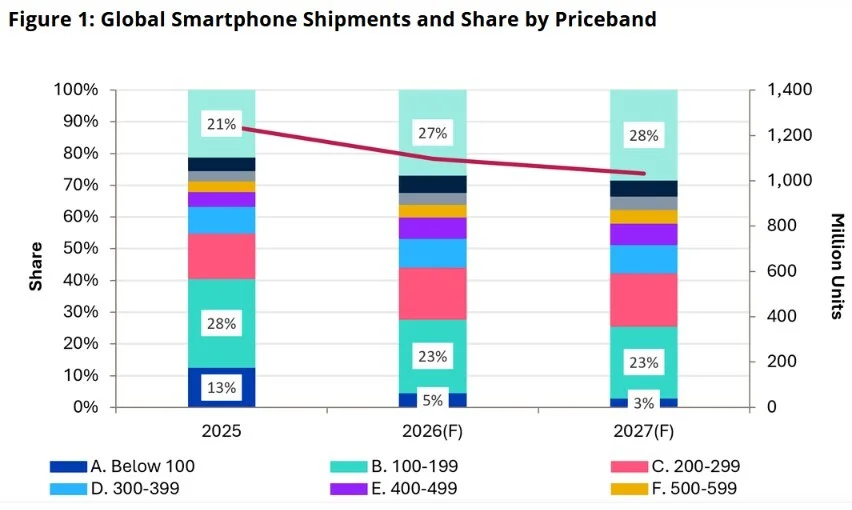
Global smartphone shipments are projected to decline 12% in 2026 to roughly 1.097 billion units, yet the market’s value could climb by the same percentage to $651.6 billion. The apparent contradiction in the latest Omdia forecast reflects a sharp shift toward higher-priced phones rather than stronger unit demand.
Omdia expects the average smartphone selling price to increase 27% to $594. The sub-$200 segment is expected to see the largest retreat, falling from 40.6% of global shipments in 2025 to 25.6% in 2027. Phones priced above $800 are projected to move in the opposite direction.
| Price band | Share of global shipments, 2025 | Forecast share, 2027 |
|---|---|---|
| Below $200 | 40.6% | 25.6% |
| Above $800 | 21.1% | 28.4% |
Rising RAM and storage costs are putting particular pressure on entry-level devices, where margins are already thin. Manufacturers have limited ways to absorb those costs:
- Raise handset prices.
- Reduce hardware configurations.
- Discontinue certain models.
Longer replacement cycles are also weighing on shipment volumes, according to the forecast. Extended software support, capable mid-range processors and smaller year-over-year hardware changes mean a phone bought several years ago may remain adequate for more users. The key competitive question is how vendors reshape their lower-cost portfolios as component costs rise and premium models take a larger share of the market.