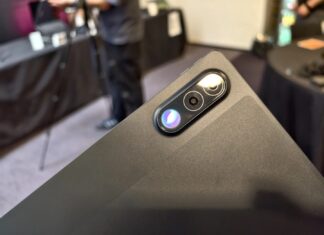

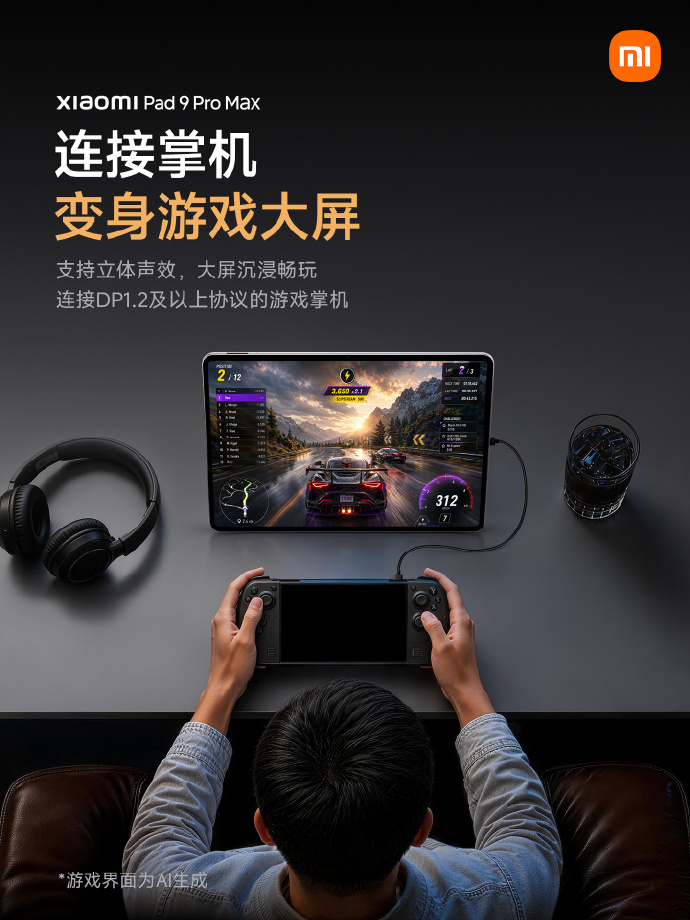
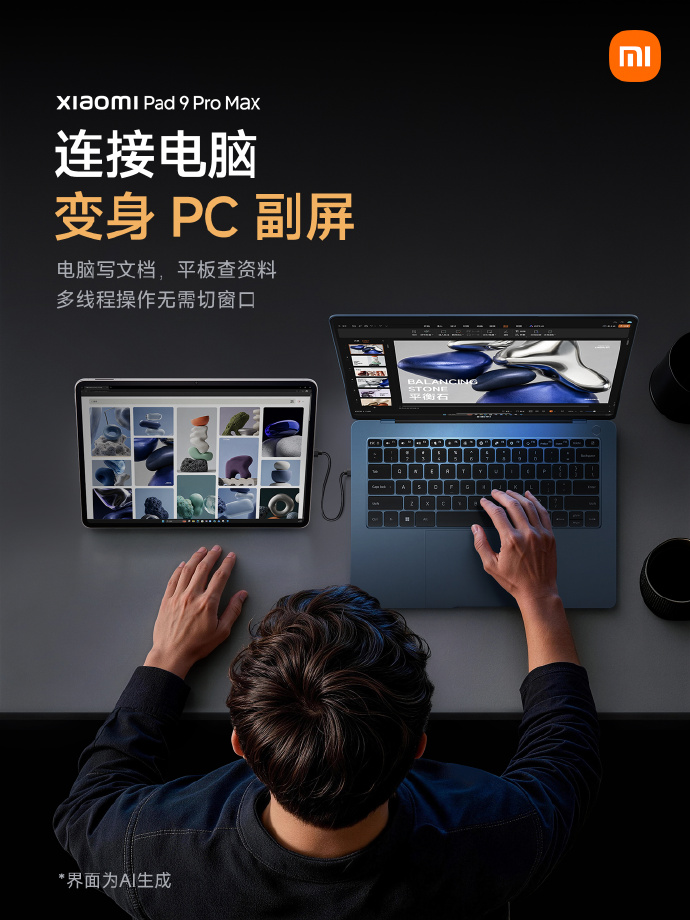
Xiaomi’s Pad 9 Pro Max will be able to serve as a wired secondary display for a PC or a larger screen for a handheld console, as the company positions its upcoming 13.3-inch tablet around productivity and external-device connectivity. The tablet is due to be unveiled in China on September 7.
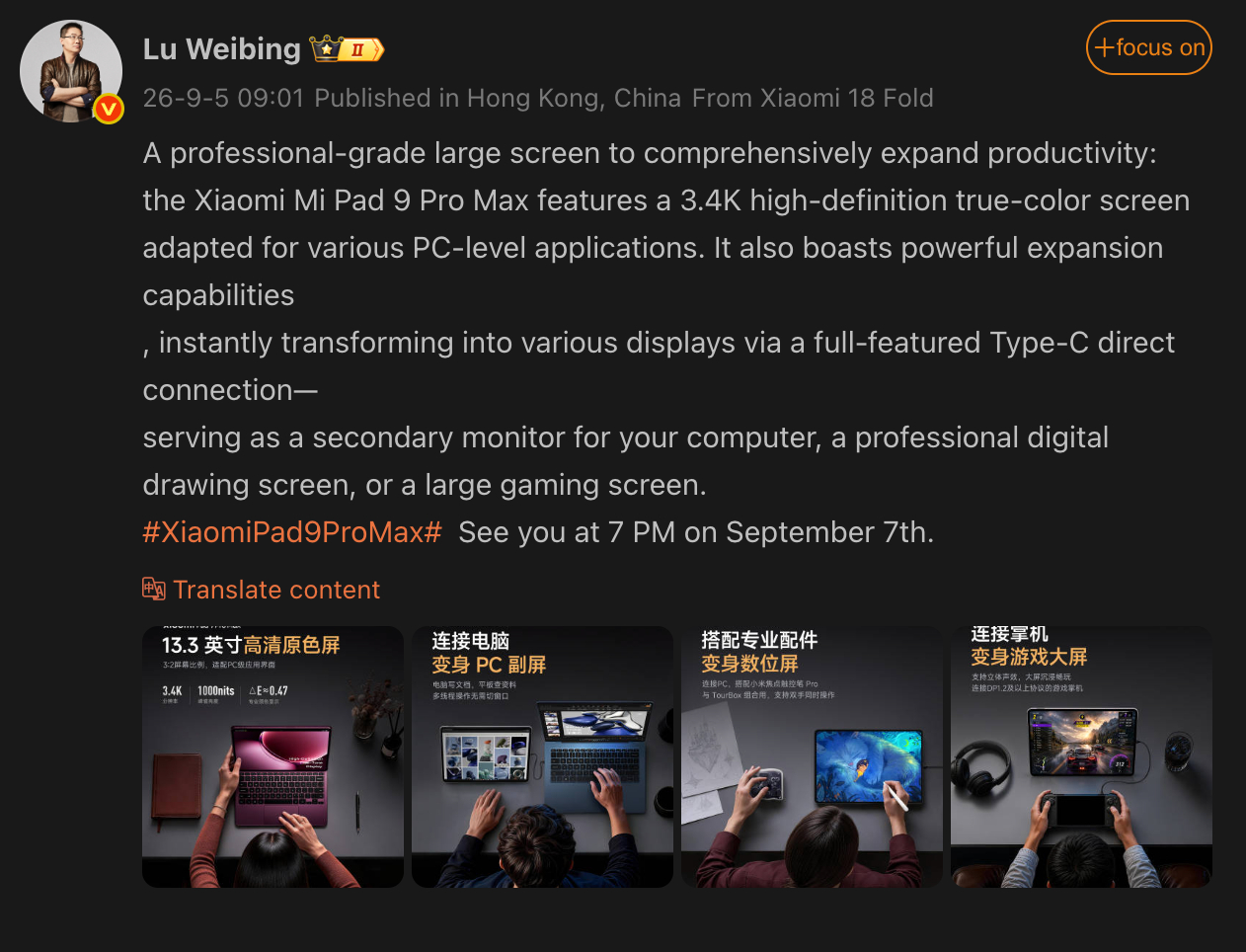
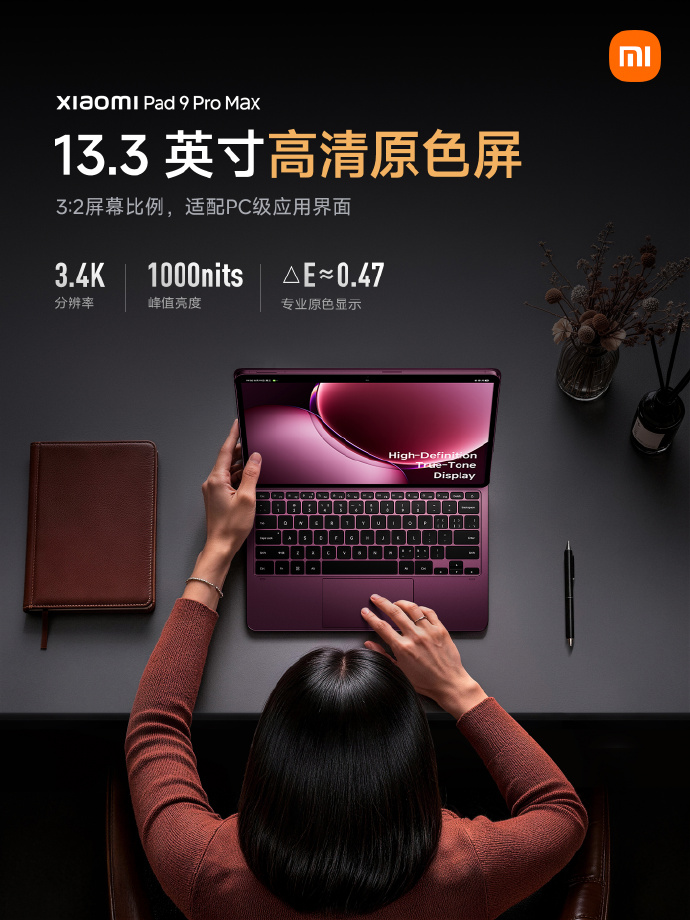
The 13.3-inch panel has a 3:2 aspect ratio, 3.4K resolution and claimed peak brightness of 1,000 nits. Xiaomi also cites a Delta E color deviation of around 0.47. Its USB-C port supports DisplayPort 1.2 or newer, enabling direct wired video input from compatible computers and handheld consoles.
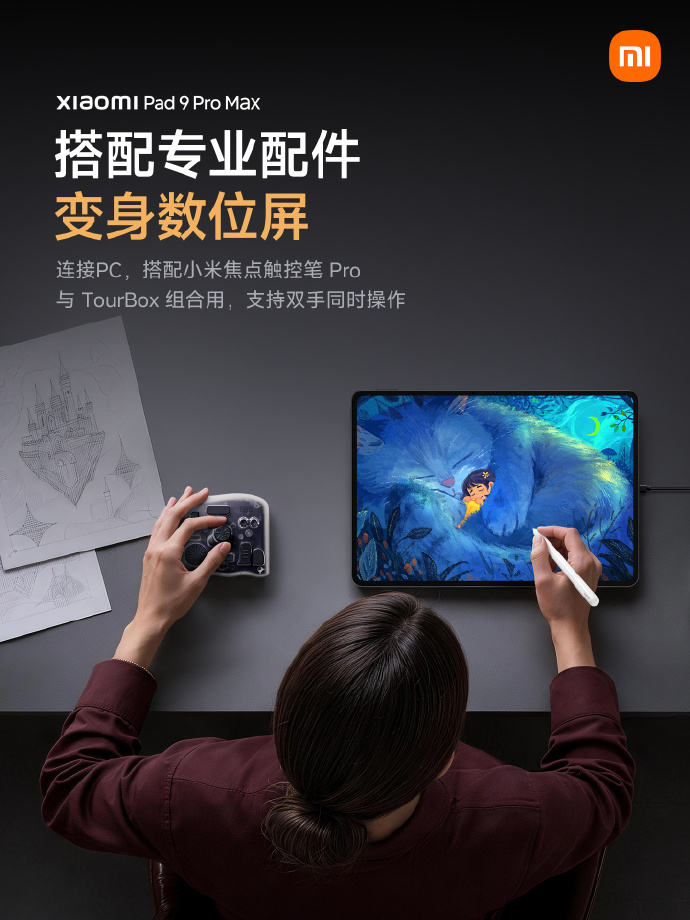
For creative work, the Pad 9 Pro Max supports the Focus Stylus Pro and TourBox controller at the same time. Xiaomi is also preparing a matching floating keyboard. The tablet uses a metal body and will be offered in a Rich Wine Red finish.
It will ship with HyperOS 4, which adds several desktop-oriented tools. The file manager can track a file’s origin, while the document reader supports handwritten annotations and font imports. Xiaomi’s browser adds vertical tabs, tab groups, web translation and support for third-party AI plug-ins.
HyperOS 4 can arrange two, three or up to six apps on screen depending on the selected layout. Xiaomi also says the browser has been adapted for the 500 most-visited websites, though the extent to which that delivers a desktop-class browsing experience remains to be tested.
The tablet is powered by Xiaomi’s in-house XRING O3 processor and uses LPDDR6 memory. Xiaomi claims more than 5.25 million points in AnTuTu V11 and says the chip’s multi-core CPU and GPU performance compares with Apple M5-equipped tablets. Those are manufacturer claims rather than independent benchmark results. The company also claims LPDDR6 delivers 48% higher memory bandwidth.
Pricing and plans for markets outside China have not been announced. Xiaomi’s September 7 event should provide the remaining hardware details for a tablet that is clearly aimed at the overlap between premium Android slates, the iPad Pro and thin laptops.