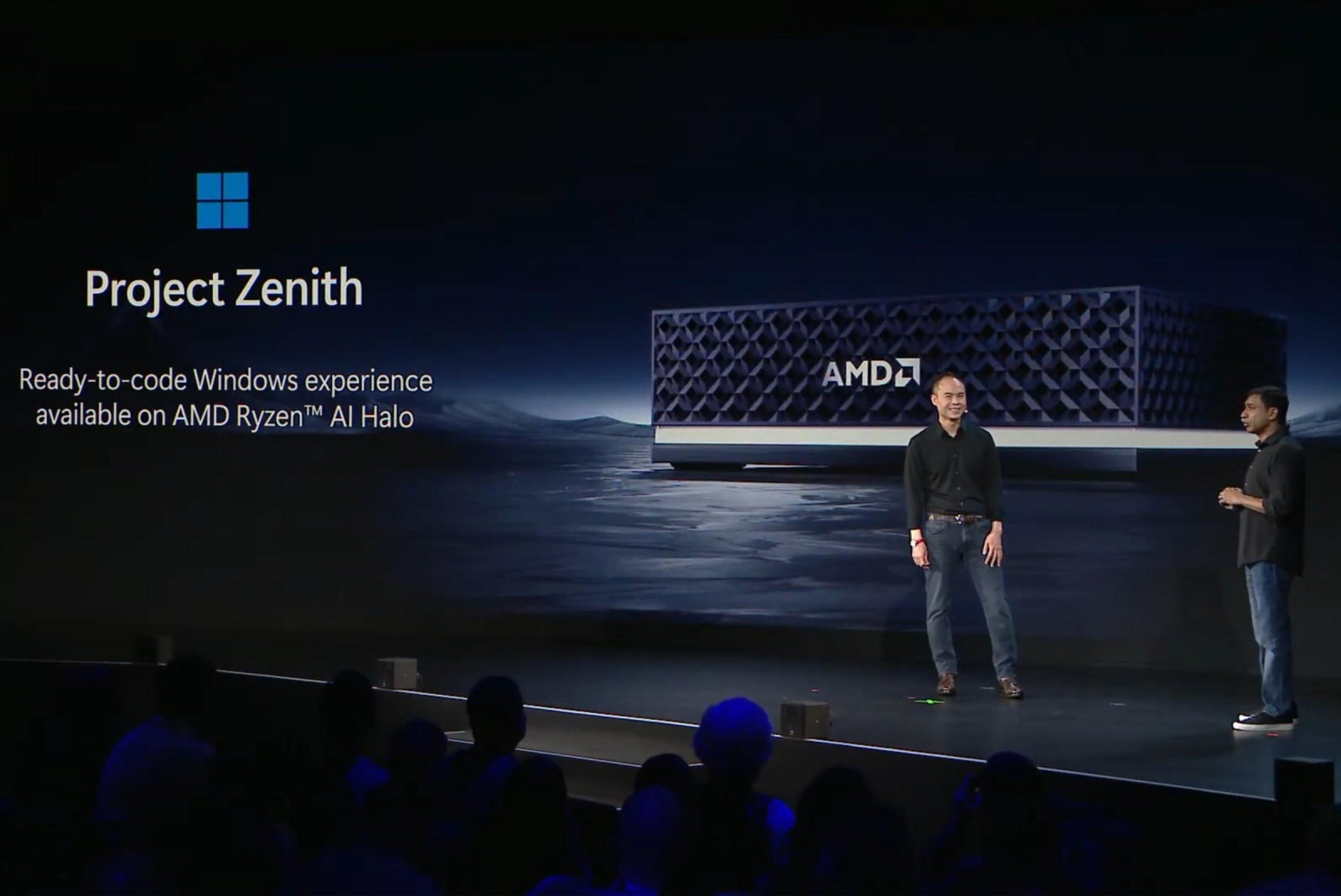
Microsoft has unveiled Project Zenith, a Windows 11 “ready-to-code” configuration aimed at developer PCs capable of running AI models with more than 30 billion parameters locally. The company says the first Zenith systems will be based on AMD Ryzen AI Halo hardware.
The initiative is not a new version or consumer edition of Windows. Instead, it is a preconfigured development experience that installs key tools and adjusts a range of Windows defaults that developers commonly change after setting up a new PC. Windows Terminal and Visual Studio Code are pinned to the taskbar, while the included software covers programming languages, runtimes, version control and productivity apps.
Zenith also enables File Explorer settings including file extensions, hidden files, full paths and long-path support. Microsoft is turning off recent-file displays, sync-provider suggestions, Start recommendations and account notifications as part of the configuration.
Its hardware baseline is the more consequential part of the project. Microsoft specifies at least 64GB of unified memory and memory bandwidth above 250GB/s, requirements intended to support large local models without the per-token costs associated with cloud AI services.
Microsoft is positioning Windows Subsystem for Linux as part of the same development stack, with support for working with containers directly from Windows. Zenith will also use Microsoft Execution Containers, an isolation mechanism being prepared for applications and AI agents.
AMD Ryzen AI Halo will power the initial Project Zenith devices, while Microsoft says systems from additional OEMs and chip partners will follow. The company has not yet named compatible PCs, set prices or provided a specific commercial release date, leaving the first hardware lineup as the next major detail to be confirmed.