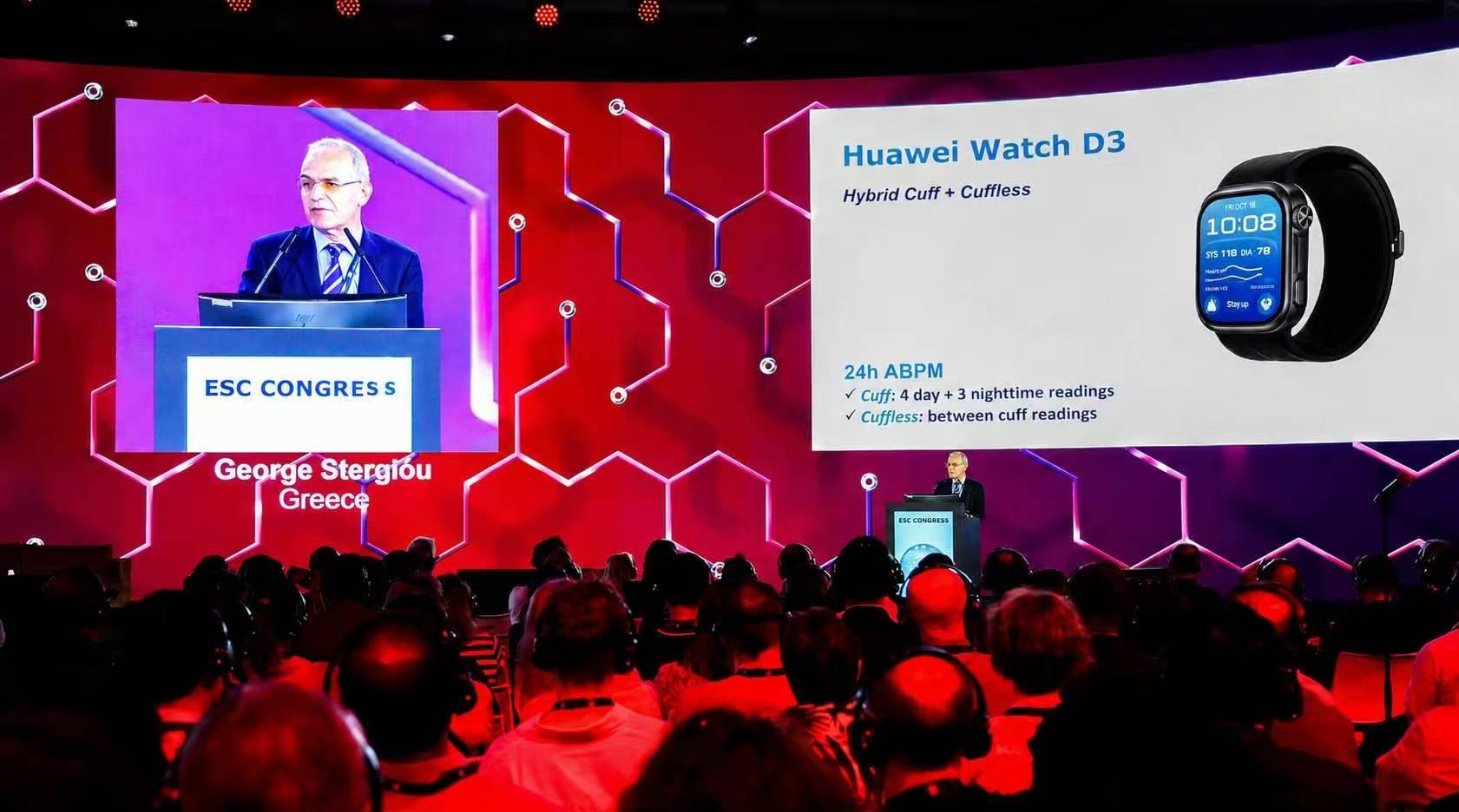
Huawei has unveiled Terve Research, a platform designed to connect European academic and medical institutions with consenting users of Huawei wearables for health research. Presented at ESC Congress 2026 in Munich, the service will allow researchers to recruit participants and receive the data needed for a study automatically after consent has been provided.
Terve Research will support two study formats. Closed studies will allow researchers to select participants and provide the required devices, while eligible Huawei wearable users in Europe will be able to discover and voluntarily join open studies through the app. Huawei says transferred data is anonymized. The company funds the platform, while health-data technology provider Thryve operates it.
Although Thryve’s technology can integrate information from more than 500 health devices and services, Terve Research is limited to Huawei’s own ecosystem. That could give researchers a more consistent device base, but it also limits participation to people using compatible Huawei products.
The first two projects are scheduled to begin in September. One will investigate social jetlag—the difference between sleep patterns on workdays and free days—while the other will examine the relationship between physical activity and cardiovascular risk factors. A 2026 UK Biobank study involving 51,562 participants found an association between greater social jetlag and cardiovascular disease incidence, though the result does not establish causation.

Huawei also used the ESC event to preview the Huawei Watch D3, which is positioned as a future data source for the platform. Huawei says the watch has CE MDR certification covering individual blood-pressure measurements, ambulatory blood-pressure monitoring (ABPM), and measurements taken before and after exercise. Its blood-pressure system uses a micropump and inflatable cuff rather than relying solely on optical-sensor estimates.
The Watch D3 is scheduled for a full launch on September 2. Huawei has yet to provide wider availability details, while the initial Terve Research studies will indicate how much useful longitudinal health data the company’s wearable-only approach can produce.