
T-Mobile reportedly provided US authorities with six months of phone metadata belonging to journalist Georgia Fort, handing over about 10,000 records tied to her calls and text messages without notifying her in advance. The request was connected to an investigation into protests following an Immigration and Customs Enforcement operation in Minnesota.
The records reportedly did not include the content of Fort’s calls or messages. However, call and messaging metadata can show who a person contacted, when communications took place and how frequently they occurred. For journalists, that information can potentially expose confidential sources even without access to conversation content.
Caitlin Vogus, senior counsel at the Freedom of the Press Foundation, warned that this kind of data can help authorities identify a reporter’s confidential contacts. Fort was reportedly unable to challenge the request before T-Mobile disclosed the records because she was not informed beforehand.
Authorities reportedly used an administrative summons under 19 U.S.C. 1509, a provision traditionally associated with customs investigations and one that does not require prior approval from a judge. Defense lawyers have challenged its use in a domestic criminal investigation, arguing that the tool is being applied beyond its intended purpose.
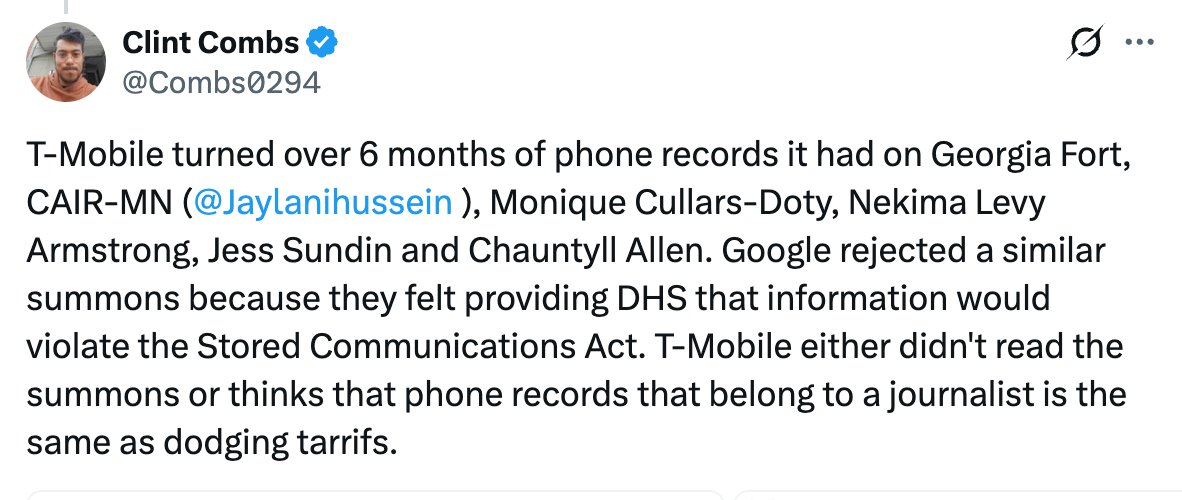
Google was also reportedly asked for information about Fort but declined to provide it under the same conditions. The company reportedly said the request could conflict with the Stored Communications Act and asked authorities to establish a connection between the investigation and a customs matter.
T-Mobile said it acted lawfully. A company spokesperson said the carrier takes privacy protection seriously and reviews government requests before responding, but declined to discuss the specific case.
The dispute puts renewed focus on how US agencies can obtain telecommunications metadata without a warrant. The government maintains that Section 1509 may be used to investigate violations within customs authorities’ remit, while critics argue that such a broad interpretation could raise Fourth Amendment concerns—particularly when the records could reveal a journalist’s source network.